The Artists Behind the Artwork of Star Wars
Listen to this article:
Art is so important to fandom. It pulls scenes from the screen straight to our home galleries or portfolios. It reimagines characters in new costumes or with different companions, or dazzles us with behind-the-scenes looks at designs that were either altered or never fully realized. From traditional ink and pen to digital compositions, this official art has a vital place in how we honor the things we geek out over.
Concept art, then, is crucial for the fans. But it’s also important for the stories as they’re being told. Star Wars™, for instance, like many other movies, started with an idea. Then a script. And then artists took those visions and words and turned them into the heroes, villains, and creatures we see on film today.
To celebrate these concepts, we’re looking at the past and present of Star Wars art. We’ll start with the who — as in, who did the artwork for Star Wars?
Ralph McQuarrie Created Iconic Star Wars Concept Art

Of course, when we think about original Star Wars art, we tend to recall the name Ralph McQuarrie first. Specifically, McQuarrie’s hand-painted matte production artwork. This futurist created sweeping scenery and captured the details and emotions of every Star Wars character. He envisioned dramatic designs and innovative concepts for costuming, storyboards, and key worldbuilding illustrations for the original trilogy.
His figure designs for Darth Vader, Han Solo, Chewbacca, Starkiller — a precursor to Luke Skywalker — and the Imperial stormtroopers are particularly famous. While his angular art couldn’t be made 1-to-1 in the movies, it’s had a lasting impact. After all, it looks great animated — especially in Star Wars: Rebels™. Additionally, McQuarrie’s first draft of a Wookiee was eschewed in final filming, but later became the design for the Lasat species, of which Garazeb Orrelios is a member.


Inspired by his iconic designs, Sideshow once did a series of statues based on his concepts for Boba Fett, Darth Vader, and the stormtrooper. Though they are long sold out, his influence continues to capture the imaginations of fans and artists to this day. McQuarrie’s designs were even used as the basis for Star Wars action figures from various manufacturers over the years.

Returning to Rebels, the planet Lothal™ was also based on McQuarrie’s work and the character Azmorigan™ in the show takes inspiration from early Jabba the Hutt™ designs. Basically Rebels was a total return to his style and concepts. Beyond his significant artistic contributions to the Star Wars universe, McQuarrie also created concept illustrations for the Indiana Jones franchise.
Drew Struzan Did the Famous Star Wars Posters

Drew Struzan, alongside his friend Charles White III, was first commissioned to paint Star Wars art back in 1977. Together they painted a 1978 poster for the Star Wars: A New Hope™ theatrical re-release. The poster’s heightened realism style wowed audiences with rich hues and a vibrant character collage. It conveyed the adventure and excitement of the cinematic stories in two-dimensional spreads. Of course, the posters took off in popularity, adorning the wall space of Star Wars fans everywhere.
Struzan went on to create more fantasy and sci-fi artwork for Lucasfilm and many other film companies on his own. Not only did he contribute to further designs in the Star Wars saga, but he worked on Indiana Jones, Back to the Future, Harry Potter, and more. You’ll see Struzan’s lush, colorful oil paint work on posters far and wide. The style has been imitated countless times, all with the intent to pay homage to the original creator and his beloved artwork.
The Mandalorian Art — End Credits and Concepts

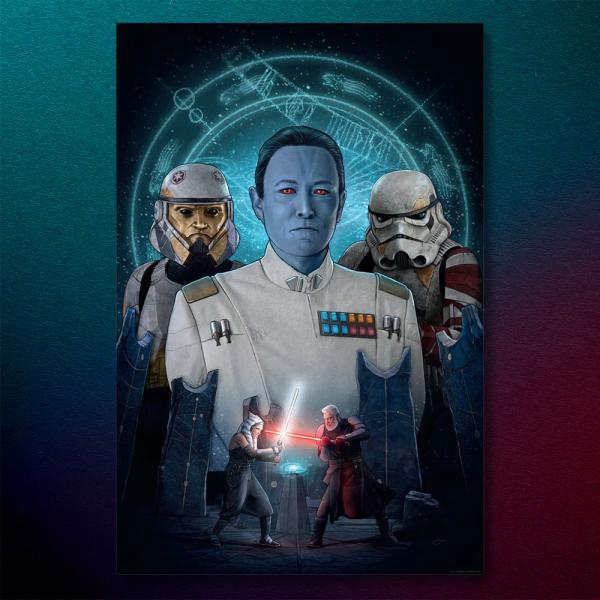
Star Wars concept artwork didn’t stop at the original trilogy, of course. Countless highly skilled and amazingly talented artists have contributed to storyboards, concept art, and coffee table books over the years. Even in later series such as The Mandalorian™, artwork serves to further ignite audience’s imaginations with each story.
During every episode’s end credits, stunning art expands on the episode’s action. Fans get to see how their favorite moments in the series were drafted and imagined before being translated into live action, puppetry, and additional scenic design. We owe that magical journey to artists Ryan Church, Nick Gindraux, Brian Matyas, and Christian Alzmann. The Mandalorian art brings the visual side of the critically acclaimed live-action series to, well, life. Fans can see these breathtaking images and feel like they’re part of the show itself, gaining even more insight into their favorite scenes and showdowns.
As Phil Szostak, author of The Art of the Mandalorian points out, “It’s a very symbiotic relationship between writing and art. Star Wars visuals are not like anything in our world. And so these artists really inject life into the story in a way that the writer would struggle to do alone.” From the opening crawls to the end titles, the credits from a galaxy far, far away are out of this world! Art holds an important place in Star Wars storytelling at nearly every turn.
Were you aware of who does the Star Wars artwork before now? These concepts and designs help bring all the ideas to action-packed life in theaters and on streaming platforms, so it’s important to recognize the creators!
Share your admiration for their art at side.show/geekgroup or in the Sideshow Social Network. And as always, don’t forget to Let Your Geek Sideshow!
By Jasmine Edwards

Connect with Jasmine
More from Jasmine
- Which Creepy Clown is Scarier: The Joker or Pennywise?
- Halloween Ends: Who Has Survived Michael Myers?
- Dark Comedy: Humorous Horror Heroes and Villains
- Which Horror Movie Did You See Way Too Early?
- The Scariest Fictional Witches in Horror and Fantasy Films
✍️ Written by Humans, Not AI
Related Products
The Child