Queers for Fears: Gay Directors Behind Iconic Horror Films
As we’ve covered in previous articles this Pride month, horror as a genre is undeniably linked to the queer experience and the diverse spectrum of love and self-expression found in our world. It makes sense, too — our favorite mythologized monsters all reflect something about humanity. Anxieties, fears, and hatred can become the shadows under the bed (or lurking in the closet) until we face them head on.
To dismiss horror as simply a fantasy space splattered with a little extra blood is to ignore and dismiss the very real life experiences that serve as inspiration for these haunting tales of terror. And even if they’re not intentionally created as explicitly LGBTQ+ stories, horror movies have a way of giving fans a place to revel in that “otherness” which draws them to the darkness of vampires, demons, and other children of the night.

Today, we’re casting the spotlight on some famous gay individuals behind the scenes of cult classic and other hit horror movies that stand as titans of the genre — but as the writer of this list I’d first like to acknowledge that there are countless queer artists both behind and in front of the camera throughout the history of horror. And in today’s modern age, filmmaking is undeniably growing more diverse as more people from all backgrounds have the means to make their own stories without waiting for a big studio’s sign-off. This list doesn’t reflect the full scope of LGBTQ+ contributions to the genre, instead focusing on some of the more prominent examples in modern pop culture.
Joel Schumacher — The Lost Boys

Perhaps best known for his directorial work on Batman Forever and Batman & Robin, openly gay director Joel Schumacher also brought horror fans The Lost Boys, the quintessential “bad boy” vampire film of the 1980s. This film’s presence in pop culture later inspired a nod from director Jordan Peele in his horror film Us, and the movie’s makeup effects (led by the late Greg Cannom) practically pioneered a new breed of bloodsucker on screen.
While the film doesn’t have any explicitly gay characters, there’s undeniable homoerotic undertones as Michael seeks to join David’s biker gang of eternally teenage rebels. Plus, there’s that entire scene of oily, musclebound Tim Capello on the saxophone — a specific request by Schumacher himself, as he had a photo of Capello in his office even before the musician was asked to perform a number on the boardwalk.
Clive Barker — Hellraiser

Prominent novelist Clive Barker also stepped behind the camera to direct the original Hellraiser, the film adaptation of his novella The Hellbound Heart. From the publication of his first book with a gay protagonist, Sacrament, Barker has been open about his sexuality and participation in gay leather and motorcycle club subcultures.
Some of these ideas, mixed with biblical allusions, are very clearly present in the Cenobites of the franchise — masters of pain and pleasure, dressed in dark leather costumes with whips, hooks, and chains. While they are demons to some, they’re angels to others. The complexities of identity and “otherworldly” experiences form a strong visual identity for the world of Hellraiser, and Pinhead in particular.
Andrew Fleming — The Craft

“We are the weirdos, mister.” The Craft might center on the horrors of parochial school life and the experience of being an outcast teen girl, but it was helmed by director Andrew Fleming, another gay director who has been with his partner now for 23 years. The high school horror film has become an undeniable cult classic, hitting well with goths and queer audiences (two demographics that share overlap). It follows four teenage girls bonded through blood and their shared “weirdness,” especially via witchcraft.
On the Hey Dude… the ’90s Called! podcast (timestamp 45:32), actress Robin Tunney (who played The Craft‘s lead witch Sarah Bailey) notes her surprise that the project later became an important queer film, but attributes that accolade to Fleming being out and confident in his identity during a homophobic time in Hollywood, infusing those experiences into his work.
Don Mancini — Child’s Play

Child’s Play, or the “Chucky” franchise, has recently been at the forefront of updated LGTBQ+ representation in horror since the killer ginger doll acknowledged his child Glen’s genderfluid identity. (He’s a murderer, not a monster.) If Chucky can accept his queer kid, no one else has any excuse! But that’s not the first representation this series boasts in front of or behind the camera.
Director Don Mancini, the original creator of the series, is an out gay man who has used his experiences to inform the Child’s Play franchise’s writing and themes. He has noted this as a conscious decision on his part, and it was his influence over the television series that led to featuring a gay protagonist. Mancini drew from elements of his own life, including the bullying and abuse he suffered from his father, for the character of Jake Wheeler.
Kevin Williamson — Scream

The screenwriter behind Screams 1, 2, and 4, plus director of the upcoming Scream 7, Kevin Williamson has been out since 1992. In his career, he also notably created Dawson’s Creek and The Vampire Diaries, and he wrote screenplays for The Faculty and I Know What You Did Last Summer. Basically, he defined teen drama and horror for the ’90s and 2000s. You’re welcome.
While the Scream franchise has mainly featured openly queer characters in later installments not penned by Williamson, the early films’ strong female leads (and occasional questionable haircuts), campiness, and horror-aware commentary all combine to make the franchise undeniably iconic in the queer community — plus, do we even have to mention Billy and Stu have an undeniable chemistry to them? What’s a little stabbing between friends?
James Whale — Universal Monsters

Some of pop culture’s most beloved “outcasts,” with whom audiences tend to identify more than they fear, are the Universal Monsters. English director James Whale was responsible for the films Frankenstein, Bride of Frankenstein, and The Invisible Man most specifically. Whale was openly gay during most of his career in the 1920s and 30s, which was rare for the time period. It’s debated by some whether his refusal to remain closeted led to the end of his career and premature retirement.
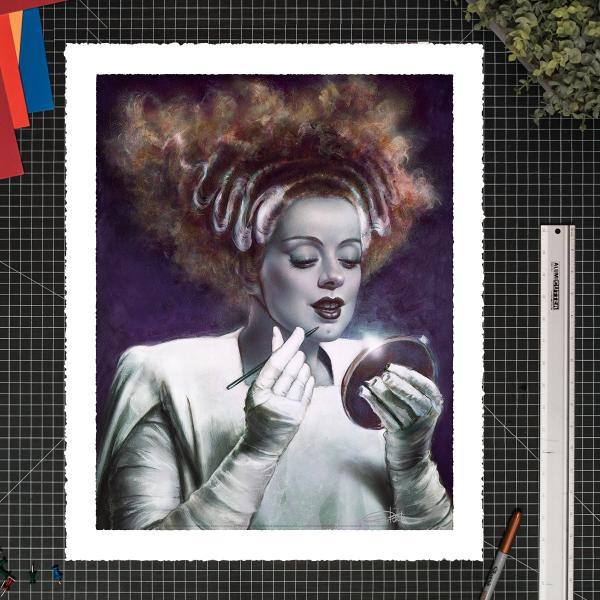
Bride of Frankenstein specifically gets examined in this context for the addition of Doctor Pretorius (not found in Mary Shelley’s original texts) and his dynamic with Doctor Frankenstein. The monsters themselves also represent that outcast nature, and the creation of the Bride may be viewed as a desire for human (read: heteronormative) connection on the OG Monster’s part. Similarly, the Invisible Man has been viewed as a subtextual commentary on existing as someone who “truly cannot be seen” and has to repress himself for society.
This is just one fraction of the importance and impact of making art that’s personal, passionate, and otherwise “transgressive” — where better to do that than the horror genre? Many individuals put themselves into their work, so it’s important to remember to take a look behind the scenes to truly understand the full story of a film. (And since horror isn’t just for October anymore, you can do that any time of the year!)
Were you surprised to learn anything new from this article? Join the conversation with other horror fans over at Sideshow Social Network or in side.show/geekgroup, and don’t forget to Let Your Geek Sideshow!
By Amy Chase

Connect with Amy
More from Amy
- QUIZ: Which Trope Would You Be in a Horror Movie?
- The Scariest Domains of Dread in D&D’s Ravenloft Setting
- 5 of the Scariest Moments in Critical Role
- POLL: Who Is the Best Slasher?
- Cottage-Gore: 8 Horror Movies and Shows Set in Cabins
✍️ Written by Humans, Not AI
Related Products