Poképocalypse — What Happened to Humanity in Pokopia?
Originally published on April 10, 2026. This article discusses the post-apocalyptic plot of the Pokopia game and its larger implications within the Pokémon franchise.
Since it dropped on March 5, 2026, Pokopia has totally transformed the way gamers experience the Pokémon franchise — and that’s not just because you’re playing as a Ditto.

But don’t be fooled by the aesthetic cuteness and cozy gameplay loop. Pokopia disguises a dark and depressing reality behind this adorable environmental restoration simulator. As you progress through healing biomes and building houses to encourage Pokémon to return to their habitats, your Ditto (shaped like a human in memory of its former Trainer) can discover lost notes and crumbled remnants of civilization.
The only problem? The Pokémon can’t actually read human language! So only you, the gamer, are burdened with the horrifying knowledge of the truth — that humanity left and the Earth died out perhaps hundreds of years earlier. Let’s dive (or Dig, or Rock Smash) into the plot of Pokopia that you wouldn’t expect from the video game’s cheery exterior:
- Pokopia takes place in the Kanto region.
- Humanity had to flee the Earth because of climate disasters.
- Pokémon were placed in the computer system to hibernate.
- Different Pokémon have different reactions to humanity’s absence.
Pokopia takes place in the Kanto region.
- The Kanto region is the original setting of Pokémon Red, Green, Blue, Yellow, and subsequent remakes.
- Players can discover the ruins of Pallet Town and Fuchsia City, among others.

While the general environment of Pokopia, a portmanteau of Pokémon and utopia, appears to be a cheerful, nonspecific region in which players can build and terraform to their hearts’ content, that didn’t turn out to be the case. Many fans poured marathon hours into the game on release day, quickly discovering through context clues and eventual in-game information that this idyllic paradise is actually the ruins of the Kanto Region. And it doesn’t start out as a bright, cheery paradise.
The Kanto you first inhabit is dry, bleak, and barren. After Professor Tangrowth, the first Pokémon you encounter is a dehydrated Squirtle lying in the deadened grass. A Pokémon Center can be found in mossy ruins before your Ditto takes it upon itself to restore the environment.
As you explore more, you’ll also encounter areas such as Bleak Beach (formerly Vermillion City, with ruins of the S.S. Anne visible), Rocky Ridges (formerly Pewter City and Mt. Moon, known for their ore deposits), the Sparkling Skylands (where you can rebuild science company Silph Co.), and more. A region called Palette Town (like the original Pallet Town) is considered an open zone, where players are free to decorate as they please without any specific story objectives.
Humanity had to flee the Earth because of climate disasters.
- The game’s core mechanics involve restoring withered and bleak biomes for Pokémon to inhabit.
- It is unknown what caused the overall climate disaster, but scientists had enough early knowledge to prepare.
- Humanity fled into space to escape the dying planet.
- Lore notes and clues within the environment reveal the approximate timeline of the game.
By the later hours of your game, the landscape of Pokopia will look like a vibrant, adorable, customized haven. Trees and flowers should be flourishing, the seas and skies are clear and bright, and unique buildings will form an engaging skyline. But before all of that, you must first encounter a barren wasteland of dried plants, dilapidated ruins, and unrefined, uncontrolled land.
In these ruins, your Ditto will encounter diary entries, letters, and newspapers left behind by humans who used to live here in the Kanto Region. While Ditto technically can’t read them, you as the player can. You’ll discover charming letters from civilians like fishermen and kids, as well as increasingly urgent and concerned notes from officials like scientists.
The reason the planet is in such a sorry state is because a series of progressive climate disasters threatened to lead to a global famine. The lore starts as innocent stories about choppy seas and freak hurricanes, and becomes a fraught tale of a full-scale effort to evacuate humanity and protect Pokémon before the planet becomes unable to sustain any life. As a result, humans relocated to outer space in hopes of returning to Earth after the danger had subsided.
Pokémon were placed in the computer system to hibernate.
- The PC is used in Pokémon games for Pokémon storage.
- A special PC in Pokopia was created to keep Pokémon safe until humanity could return.
- Its failsafe measure would slowly release Pokémon upon detection of stable, survivable habitats, explaining why you progressively meet more characters as you restore more biomes.
- Something went wrong with humanity’s departure and the game suggests it’s been hundreds of years since they last made contact with Earth.

Humans weren’t just focused on themselves when preparing for the incoming disasters. Notes from the past reveal that scientists were working tirelessly to be able to help Pokémon survive, but taking them into space wasn’t the right solution. Thus, many of the world’s lovable pocket monsters were put into the PC system to hibernate safely. Some special Pokémon, like Legendaries, simply retreated to the furthest reaches of the natural world. They called this the Pokémon Conservation Project (the initials of which include PC).
In the games, the PC system is where you store Pokémon (and in some games, items) in boxes within a computer for retrieval at any other PC terminal. In Pokopia, the PC also had a failsafe release that would allow Pokémon to reemerge if the computer could detect the presence of a habitable biome. This trigger was designed in case humanity was not able to return and release the Pokémon safely — which, judging by the gameplay loop, definitely didn’t happen.
Are Humans Coming Back to Pokopia?
It’s clear something went wrong with humanity’s plans to return to Earth. No, we don’t think they all died off in space, but they certainly haven’t had the resources or opportunity to return.
During the game’s plot, you do send a rocket into space with evidence of the Earth’s revitalization. It reaches a human space station, but the game doesn’t reveal what comes of this. For now, the story of Pokopia remains one of natural resilience in a purely Pokémon world.
Different Pokémon have different reactions to humanity’s absence.
- Some Pokémon are glad that humans are gone, while others specifically thrived in more urban environments.
- Your Ditto’s appearance is explained as being based on your memories of your Trainer.
While the game’s overall story gives a charming and optimistic perspective on rebuilding a Pokémon utopia, one of the core tenets of the franchise has always been humans and Pokémon living in harmony. That ideal may not always be the case — one tragic example of this being Mewtwo’s origins — but this cozy simulator game shows one of the furthest extremes when that harmony goes out of balance.
Many of the Pokémon don’t remember their former Trainers or humans, but form peaceful communities with one another throughout the game. Others take a more indifferent approach, such as the Legendary Kyogre, hibernating through the catastrophe before returning to aid the player in restoring the world to its natural state.
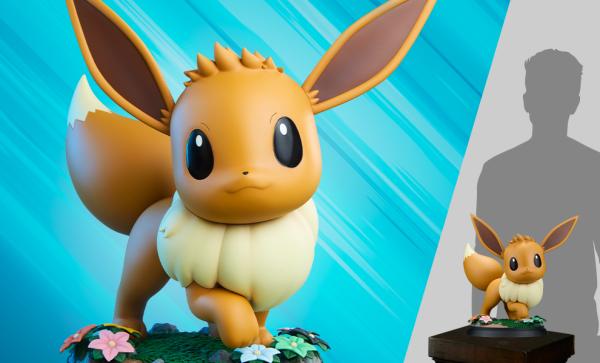
However, you’ll find countless examples of other characters who have stronger opinions. An unsurprising example, Mewtwo did not trust the humans and seems relieved they are gone. Other Pokémon that thrive in urban environments, like trash-based Garbodor, actually miss the presence of humans and the symbiotic relationship they experienced in a bustling modern society. Even Eevee and all of its Eeveelutions can be found in the game as well, despite Umbreon and Espeon requiring external factors like Trainer friendship to evolve.

Peakychu, Mosslax, and Other Pokémon with Unique Adaptations
New Pokémon variants were unveiled prior to the game’s release, but players only discovered their stories once they had their hands on Pokopia. And what we discovered was heartbreaking.
Four Pokémon were given new, unique appearances, called Peakychu, Mosslax, Smearguru, and Tinkmaster, whose design wasn’t revealed in pre-launch marketing.
- Peakychu is a pale, lethargic Pikachu. She used up so much of her electricity to help others before the catastrophe that her body lost its natural electricity-generation abilities.
- Mosslax is a moss-covered Snorlax. It lost a battle and became so upset that it slept until its entire body became overgrown in moss. It even slept through humanity’s evacuation.
- Smearguru is an extra-colorful Smeargle. It is also a literal “starving artist,” unable to paint masterpieces and help brighten up buildings until the player Ditto can help feed it.
- Tinkmaster is a Tinkaton obsessed with the study of human technology and construction. Its hammer is equipped with multiple tools, and it aids Ditto in restoring old buildings and other feats of engineering.
What do you think of Pokopia‘s underlying plot? Are you just having fun building cute environments for all your favorite pocket monsters?
Share with other Pokémon fans over at Sideshow Social Network or in side.show/geekgroup, and don’t forget to Let Your Geek Sideshow!
By Amy Chase

Connect with Amy
More from Amy
- QUIZ: Which Trope Would You Be in a Horror Movie?
- The Scariest Domains of Dread in D&D’s Ravenloft Setting
- 5 of the Scariest Moments in Critical Role
- POLL: Who Is the Best Slasher?
- Cottage-Gore: 8 Horror Movies and Shows Set in Cabins
✍️ Written by Humans, Not AI