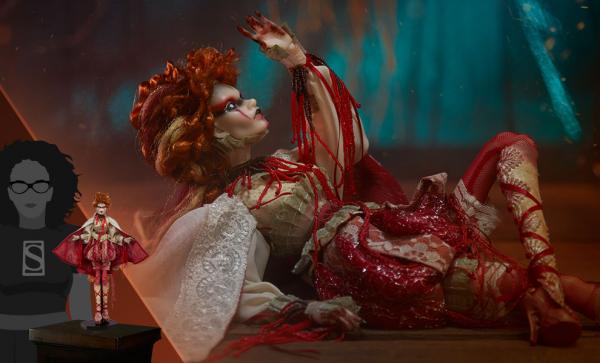
The Five Senses of Fear: Redefining Body Horror
The term “body horror” was originally coined in 1989 by film historian Phillip Brody regarding a group of horror movies produced in the 1980s. Unlike slasher and monster movies, body horror movies focused on more transformative terrors afflicting the the human body, rather than over-the-top violence or mutilation.
Films like David Cronenberg’s remake of The Fly and John Landis’ An American Werewolf in London are great examples of 1980s body horror. In today’s cinema, though, horror producers have extended the elements of body horror to the five senses that make up our consciousness, with some movies hyperextending into our elusive sixth sense (and we’re not talking about Shyamalan).
With so many recent releases focused on sensory horror, such as Fresh or Oddity, it’s fair to say that there is a new trend in modern horror. Here are some of the pioneer films aimed at attacking all of your senses.
TOUCH

The sense of touch is probably the most connected to all types of horror movies. From body horror all the way to slashers and monster flicks, our sense of touch is what connects us to the terror that is chasing us. By extension, we watch characters run and hide from their attackers, all the while feeling a connection to them via their fear of being “touched” by their pursuer. However, a few movies stand alone due to their use of touch as a central part of the storytelling.
Eli Roth’s Hostel brought us all closer to our fear of being touched, and the terror begins with the killer simply touching the leg of one of his victims on a train. Things gets so much worse from there. While Hostel can be categorized as a somewhat stylish slasher, the intimacy of the torture scenes really puts the audience in touch with their feelings of, well—touch.
It Follows also utilizes the sense of touch by making it a pivotal part of the plot. With an aesthetic that is reminiscent of the body horror of the 1980s, It Follows details the twisting lineage of a curse that is passed from one person to another through sex — think of it as the ultimate abstinence public advertisement. Since we all can figure that sex probably involves a little bit of touching, It Follows capitalizes on the fear of being touched.
TASTE

The sense of taste is difficult to exploit in a horror movie — unless you can entice the audience to lick the screen. However, there are a few movies that use taste, and specifically our aversion to bad tastes, to create horror in our guts. And for some reason, it’s always the vegans and vegetarians who are getting the shaft.
Eli Roth hits the list here again with his 2013 release, The Green Inferno. The movie is about a group of activists that find themselves held captive by a murderous tribe. It slowly dawns on the survivors that the tribe not only plans on killing them, but having a taste of them as well. There is a standout scene in which a vegan girl is forced to eat meat to stay alive, only to discover a shred of her friend’s tattooed skin stuck to the bottom of her bowl. The scene happens rather quickly, but her death leaves a lasting impression.
Raw is a 2016 French-Belgian movie about a vegetarian girl who suddenly finds herself craving human flesh (maybe eating people-meat doesn’t count?). After consuming a rabbit’s kidney in a school hazing ritual, something primal awakens inside of her and she is forced to kill in order to satiate her cravings for flesh. Half a coming-of-age movie about social pressure and half a disturbing, blood-soaked fever dream, Raw will definitely leave you wanting to go on an all-broccoli diet.
SMELL

Like taste, the sense of smell is another hard one to convey on the big screen. For a time back in the 80s and 90s, some people got the idea that movie theaters could pump smells into the room to enhance the viewing experience; it didn’t take long to figure out what a horrible idea that would be. So instead, horror movie producers have resorted to different methods.
Perfume is a beautiful quasi-horror movie set in 18th century France. The movie follows Jean-Baptiste Grenouille, a man gifted with a hypersensitive nose and obsession to collect smells (it sounds stranger than it is in the movie). He takes an apprenticeship with a perfumer who teaches him the secret within collecting 12 smells to create a perfume, and hints at a mysterious 13th smell. Armed with this information, Grenouille goes on a killing spree to collect the scents of 13 women.
An indie-arthouse style horror movie, Scent also uses smell as a plot device responsible for spreading a zombie-like plague. The victims are overwhelmed by lust, confusion, and finally madness, all because they sniffed something sinister in the air.
SOUND

Unlike taste and smell, the sense of sound is a primary tool used by moviemakers to frighten people. Jumpscare movies are notorious for reeling you in with a quiet section, only to surprise you when the monster pops out of the closet. And some visual scares are simply not scary without sound. Just about every horror movie has used the jumpscare technique to some degree, so it took a truly unique movie to remind us how scared we are by our own ears.
A Quiet Place is relentless. The plot is like a hydra; a soon as the characters solve one dilemma, they are confronted by two more. But nothing is more pulse-pounding than the off chance one of them might step on a twig or cough at the wrong time. A Quiet Place perfects the simplicity of a sound design aimed at connecting you to the deafening sound of a pin drop. If you’re not careful while watching this movie, you might just find yourself holding your breath as well.
And speaking of not breathing, Hush and Don’t Breathe also utilize the silence of a movie to ramp your anxiety to the max. The necessity of silence is prevalent in both of these movies, and the characters are undone by their inability to remain quiet.
SIGHT

Equally as important as a good sound design, our sense of sight is what connects us directly to the characters on the screen. We may identify with their looks or their lifestyle, or we may see the scenes directly from their perspective. The vicarious experience of watching the screen is what really brings the horror to life, and therefore, our sense of sight is the most horrifying of all.
Lights Out will force you to make a difficult decision: whether or not to open your eyes ever again. The function of the on/off light switch effect, gimmicky as it may be, is insanely effective. With all critiques of plot or characterization set aside, Lights Out created the visual equivalent of a jumpscare for your eyes. There needn’t be sound scares or creepy music, neither blood nor guts. Just a light switch. On. Off. On. Off. It really makes you wonder if keeping your eyes closed throughout the movie would entitle you to a full refund…
Another sight-centric movie, Bird Box, is a real feast (or maybe famine) for your eyes. Staring Sandra Bullock and John Malkovich, Bird Box is a post-apocalypse horror movie predicated on the fear of actually seeing the monster; those who see the monsters are instantly driven insane. Taking cues from the teeth-gritting 2014 novel by Josh Malerman, you’ll be gripping your seat thinking: Don’t open your eyes.
And as for the sixth sense? Jordan Peele’s Get Out did a pretty good job of revealing the sensory deprivation that really exists inside our minds. But that will have to become a future type of body horror all its own.
Did we miss any sensory horror movies that terrified you? Join the conversation with other horror fans over at Sideshow Social Network or in side.show/geekgroup, and don’t forget to Let Your Geek Sideshow!
Stir up the spirits and face the monsters within … Spooktacular has been unleashed once again!
Put the EEK! in geek during Sideshow’s Spooktacular 2025, a celebration with ghastly giveaways, deathly deals, eerie exclusive perks, and more. Join us from October 23 – October 31 by visiting side.show/spooktacular and don’t forget — sleep is for the weak!
Related Products

Pumpkinhead
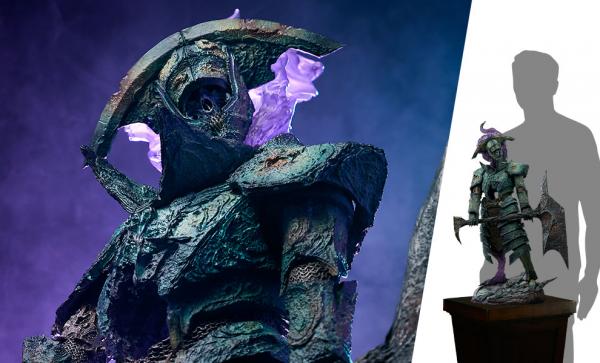
Oathbreaker Strÿfe: Fallen Mortis Knight
Sleep is for the Weak