Pop Culture’s 7 Best Character Growths & Transformations
Humanity’s annual New Year’s celebration centers around growth and change. In celebration of surviving another year on planet Earth, we try to let go of what’s no longer serving us. We shed the worst parts of ourselves to instead focus on the best bits. Sometimes, that involves discarding material items, toxic people, or bad habits. Other times, it simply means reorienting how you view and interact with the world around you.
In either case, you’re taking strides to become the person you want to be and are meant to be. Cheers to that! And likewise, let’s make a toast to the characters in pop culture who have achieved the same. Since fiction also mirrors reality, the characters within our favorite stories often struggle and change. Through them, we can confront the hard truths. Below, we’re celebrating some of the best growths and transformations in movies, television, and more.
Draco Malfoy (Harry Potter)

Draco Malfoy is an unrepentant bully during most of the Harry Potter series. That’s true for the books and movies — although I still don’t forgive the Prisoner of Azkaban film for altering Draco’s calm moment with Buckbeak. Anyway, Draco really is a classic schoolyard bully. He calls Hermione Granger and Ron Weasley filthy names, while constantly taunting and belittling Harry. Due to his pure-blood heritage and upper class upbringing, this Slytherin student is pompous, pretentious, and petty. He is intolerable, to say the least. Except … when we start to see a different side of him in The Half-Blood Prince. That’s when we start to understand that Draco Malfoy is a victim.
Hear me out. Draco Malfoy is forcefully indoctrinated into the Death Eaters. Then, he becomes physically ill while attempting to help them infiltrate Hogwarts. Terrified of Voldemort and understanding his task is morally wrong, Draco tears himself apart trying to reconcile these things. While he does help Voldemort in book/movie six, Draco drastically changes course in The Deathly Hallows. He lies to protect Harry’s identity, and also throws Harry a wand for his final duel with the Dark Lord. Finally, Draco remains at Hogwarts with the survivors, ready to rebuild on the right side of history.
Jinx (Arcane)

Of all the characters on this list, Jinx has by far experienced the most ups and downs. As one of the main leads (and villains) of Netflix’s Arcane, we would expect nothing less. We first meet Jinx as Powder, an ambitious young orphan from the Undercity. She struggles to keep up with her sister’s ragtag group of thieves. An explosives expert, Powder builds and sadly detonates the bomb that kills most of her friends and family. After a heartbreaking fallout with Vi — and subsequent adoption by the conniving Chem-Baron Silco — Powder’s mental health shatters.
Silco raises her as Jinx, a ruthless and selfish killer. He also encourages her delusions, hallucinations, and madness, letting her blossom into a person that her adoptive dad Vander would barely recognize. Jinx makes some pretty terrifying and trigger-happy decisions in her quest for belonging. Yet in Arcane season 2, she desperately attempts to live up to the symbol of hope and rebellion she’s become.
Of course, she backslides a few times. Getting out of your own head and ditching unhealthy coping mechanisms isn’t a simple task. But she manages, sometimes, especially when she takes in a kid named Isha. At the end of her story (and presumably life), Jinx also sacrifices herself to save both Piltover and Zaun. It’s incredible to witness her journey from the pilot to the finale.
Loki (Marvel)

Let’s not mince words. Upon his MCU introduction, Loki is a spoiled brat. He is raised as a prince of Asgard, lavishing in power and prestige. But then, everything changes when he finds out he’s adopted. Loki’s absolute descent into madness is relayed in genocidal tendencies and a desire to rule over humans. At the very center of everything, however, is the young God of Mischief’s need to feel loved and valued. Unfortunately, he goes about asking for this companionship by constantly tricking and stabbing his brother Thor. Some people just don’t know how to handle their emotions.
Thankfully, Loki eventually gets a redemption arc. In the eponymous Disney+ series, Loki works alongside the Time Variance Authority. And sure, at first it’s because he’s a prisoner. Later, though, Loki genuinely comes to care for his work partner Mobius and the timelines they’re protecting. Additionally, Loki learns to love himself through loving Sylvie, a Loki Variant. In order to protect her, Mobius, and literally everyone in the end, Loki uses his godly powers to tether splintering timelines to a magical Tree of Life. His sacrifice demonstrates profound growth and a complete lack of that selfishness we saw all those years ago.
Original 5 X-Men (Marvel)

To me, my X-Men fans! Transformation is literally written into their DNA. Every iteration of the team has undergone major changes, both in terms of powers and character. But the most dynamic — and dramatic — transformations must be granted to Professor X’s original mutant heroes, the founding five X-Men.
Initially, Jean Grey’s powers were passive and unpredictable. However, all that changed when she accessed her connection to the Phoenix Force and became the cosmic entity’s eternal avatar. Likewise, Angel received a huge upgrade when Apocalypse turned him into Archangel, an alteration in appearance as well as brain chemistry. Over the years, Hank McCoy also mutated into numerous Beast forms, from blue fur to feline features and even multiple stints as a super-villain. Then, Iceman finally unlocked his full potential as an Omega-level mutant — so long snowman, hello ice crystals! Last, but not least, there’s Scott Summers. Decades of X-Men trials and tribulations forged golden boy Cyclops into a ruthless, rebellious leader of mutantkind.
Harley Quinn and Poison Ivy (DC)

A villain to antihero glow up is classic. Although many think it’s overdone, it just works for Harley Quinn and Poison Ivy. First introduced as seemingly one-dimensional Batman villains, all of the Gotham City Sirens have grown into dynamic characters in their own right. But we want to give a special and specific shoutout to Poison Ivy and Harley Quinn. Separately, they each went on journeys where they explored their emotional and psychological needs. Together, however, they truly blossomed. After all, most flowers do best when surrounded by each other in a field, and when they’re nurtured and cared for as a single entity.
Most importantly, Harley and Ivy’s romance is a pivotal part of every plot that features these two characters. In general, that marks a huge shift and transformation for DC in general. While most iconic couples are heterosexual, this fated match is wonderfully WLW. No longer subtextual or secret, their love is vital to both comic pages and animated series. Let’s cross our fingers for their introduction into live action next.
Boba Fett (Star Wars)

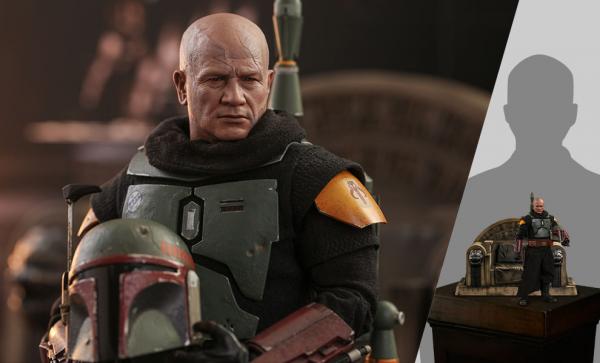
It’s so fun when fans latch onto a minor or background character. In this instance, Star Wars™ fans went crazy over a bounty hunter called Boba Fett. He has barely any screen time in the original trilogy, yet he’s one of the most popular Star Wars characters of all time. That tracks, though. After all, who doesn’t love a strong, silent type who wields cool weapons and keeps a level head throughout combat? People wanted to know more about Boba Fett, and the prequel trilogy delivers. Attack of the Clones™ reveals Boba Fett’s backstory as the son of Jango Fett. He’s an unaltered clone who watches his dad die by Jedi hands.
But there’s not anywhere to go, because Boba canonically bites the sand in Return of the Jedi™, right? Wrong! Miraculously, Boba Fett survives the sarlaac pit. Grizzled and spiteful, he clambers out of his living tomb to hone his body and skills with Tusken Raiders. There, Boba learns more gentleness and humility. He learns the value of allies, and utilizes them when he takes over as Mos Espa’s Daimyo. Now, Boba Fett rules the crime world with a heavy hand and a not-too-soft heart in The Book of Boba Fett™.
Keyleth (Critical Role)

Anyone who plays Dungeons & Dragons knows that each campaign is all about character growth. Sure, you fight monsters and learn spells. But at the core of every tabletop role playing game is a group of players who want to tell an incredible story. And incredible stories need almost total transformation. While many, if not all, characters from Critical Role fit this description, one really shines.
In fact, Keyleth from Vox Machina has one of the coolest arcs in pop culture history, not restricted to TTRPGs. But we do have to mention that the years-long format of a campaign does give storytellers an edge over others in terms of writing the best possible plot for their characters — especially when the point is powering up. And Keyleth certainly powers up. An Air Ashari intent on mastering all elements, Keyleth starts her journey as shy, insecure, and scared. Riddled with self-doubt, she never speaks up for herself. Eventually, though, Keyleth learns that her intuition and ideas are invaluable.
Campaign 1 has concluded, so we don’t want to spoil too much for show-only viewers. In the case of the animated series, however, Keyleth just reached her most badass form. She conquered a deadly trial in order to save the day. When the new villain emerges next season, Vox Machina will be lucky to have Keyleth on their side.
Can you relate to any of these characters’ journeys? Perhaps you’re at the starting point of your own. Or you’ve just closed the chapter on your best year ever, and you only have higher to climb. Just know that we here at Sideshow are always here to support you.
Find other fans to connect and transform with at side.show/geekgroup or in the Sideshow Social Network. And as always, don’t forget to Let Your Geek Sideshow!
By Jasmine Edwards

Connect with Jasmine
More from Jasmine
- Which Horror Movie Did You See Way Too Early?
- The Scariest Fictional Witches in Horror and Fantasy Films
- The Best Animated Halloween Movies and Television Shows
- DC Data: Must-Know Info About Ace The Bat-Hound
- Who Is Absolute Batman? The New DC Character Explained
✍️ Written by Humans, Not AI
Related Products
Darth Nihilus™
Ahsoka Tano
Iron Man Mark LXXXV (Battle Damaged Version) Special Edition