The Best Quotes from Guillermo del Toro’s Frankenstein
Without a doubt, Mary Shelley’s tale of Frankenstein has endured across the centuries because it’s not just a simple horror story. Beyond the fear and the gore, there’s a beating heart that speaks of grief, love, and all their intricate crossings in human connection. Death becomes a vehicle for life.
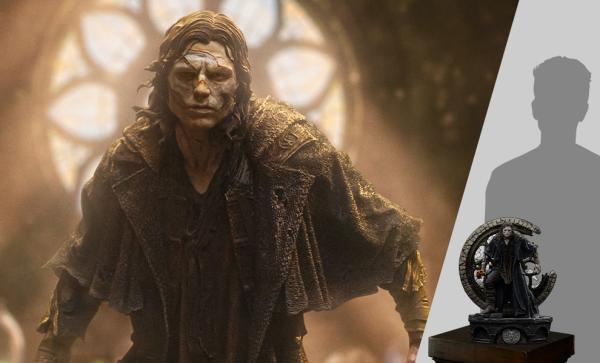
It’s a gruesome tale that starts off focusing on the creator, but switches to the creation. Now, acclaimed director Guillermo del Toro has brought his own monstrous vision to life with Netflix’s Frankenstein (2025). Frame by frame, del Toro reignites our fascination with the monster and the scientist through his signature eye-catching aesthetic. Yet the film’s dialogue also stirs something within the viewer’s soul. Below, the best quotes from the film have been reanimated for your reading pleasure.
“In seeking life, I created death.” – Victor Frankenstein

As far as sound bites go, you really can’t get more on the (stitched-up) nose than this one. Victor Frankenstein seeks to do what others wouldn’t dare — bring life back into a corpse. Like any great innovator, Victor is not afraid to take the untraveled path. But perhaps a little hesitancy, or even a bit of planning, might have saved him and others from such monumental heartache.
Upon looking at Victor’s creation, Captain Anderson asks, “What manner of creature is that? What manner of devil made him?” While The Creature may be monstrous to behold, Victor holds a spot right alongside him, only his monstrosities lie within. Victor gave no thought to what his creation might want or need, or even that it would exist as a being entirely. He merely sought to achieve, thinking nothing of the consequences of giving life. Victor decides, without the Creature’s input, “that the memory of my evils should die with me.” The Creature’s actions are certainly violent but it’s Victor’s hands that are truly red with blood.
“There is no spiritual content in tissue, and no emotion in a muscle.” – Leopold Frankenstein

Victor’s father is a strict teacher, reaching for the rod rather than extending any semblance of understanding toward his son. As a result, that cycle of abuse is perpetuated when Victor brings life to The Creature. We see that terror in the real world and when it’s reflected on the screen, we can’t help but feel sorry for all those involved. After all, science may have trouble grasping the physical realities of spirit and emotion in our corporal forms, but the evidence remains steadfast nonetheless. Our bodies hold more than just tissue and muscle.
“Do not let these old fools extinguish your voice! The answers only come when coaxed by disobedience, free of fear and cowardly dogma!” – Harlander
Eventually, Harlander’s financial support is nothing more than a selfish endeavor. But before that, when Victor feels uncharacteristically discouraged following his presentation, Harlander steps in to pick him back up. He helps Victor see that “defiance rather than obedience” is the only mindset that accomplishes anything groundbreaking. When crippling self-doubt and restrictive beliefs are cast aside, the real innovation begins.
“Like every tyrant, he delights in playing the victim.” – Elizabeth

Unlike previous versions of the character, del Toro’s Elizabeth is a vitally important entity in Victor’s downfall and The Creature’s development. As a result, many of the film’s most powerful quotes belong to her. From the start, she sees through Victor’s brilliance. Even the most gifted people can disappoint us with their behavior.
“Believing something does not make it true.” – Elizabeth
For a brief period, Elizabeth’s presence pulls Victor out from the grave he’s digging for himself. It almost seems as if they might find love in each others’ arms. However, Victor’s true nature is never really defeated. He’s selfish. Others are merely tools to reach his own goals. Elizabeth resists his advances and reaffirms her own stance that belief is different than action.
“Choice is the seat of the soul.” – Elizabeth

In that same breath of rejection, Elizabeth talks about choice. She looks at a caged butterfly, one which she caught with Victor in happier times. Like Victor, Elizabeth has a deep fascination with life in all its strange forms. But unlike the cruel scientist, she does not overlook the importance of the things we can’t see inside a body. Beyond the flesh and blood systems, the curving muscles and tangled sinews, there are the things that give life to life. And all life revolves around choice.
“In those eyes I saw pain, and what is pain but evidence of intelligence?” – Elizabeth

Like Prometheus, The Creature is bound by his creator. He is new in a confusing world, without the tools to express himself fully. Despite his strength and appearance, he’s nothing more than a newborn. Victor fails to see the living, breathing blank slate before him. Instead, he grows frustrated at the reality of life in its early stages. Fortunately, The Creature finds an advocate in Elizabeth, who recognizes his pain as proof that there is indeed a soul in this stitched-together, reanimated being.
“Of all the human anatomy, that is the organ furthest from your understanding.” – Elizabeth

This whispered insult is incredibly vindicating after seeing Victor’s treatment of The Creature. Finally, Elizabeth has no doubt of Victor’s heartlessness. In fact, despite his vast and arcane knowledge of the human body, the heart lies just beyond his reach of understanding. It’s not just an organ governed by electric charge and filled with blood. The heart is a compass, and Victor refuses to see where it points.
“We can be monsters together.” – The Creature

Like many infants, The Creature’s first word refers to his creator. All he can say is “Victor.” That singular word is a source of wonder and fear, a cry of joy and a hopeless entreaty. When The Creature develops speech, no thanks to Victor, his overarching desire is companionship. Once, that might have just included Victor. The Creature says, “I cannot die and I cannot live alone.” Eternity without companionship is torture. All he wants is another monster to quell his loneliness.
“Not something … someone. You made someone.” – The Creature

From the first moment of his existence, Victor invalidated the budding humanity within The Creature. In fact, he didn’t even refer to his creation as “he” or “him,” simply “it” to distance himself from the being he brought into the world. That kind of rejection is soul-crushing. At last, moments before Elizabeth’s wedding, The Creature asserts himself to Victor. He’s not a thing, he’s a person.
“I am obscene to you but to myself, I simply am.” – The Creature
Cruelty has a firm grasp upon The Creature’s existence and throughout most of his life, it never lets him go. Earlier, observing the naturally violent relationship between wolves and sheep, The Creature says, “Perhaps, I thought, this was the way of the world.” When all you know is hardship, it’s difficult to imagine life can be anything but that.
However, just because something feels inevitable doesn’t make it right. Violence against others, for no reason other than being who they are, will always be wrong. There’s no way to misinterpret that natural rule. Hearing The Creature lament his supposed “obscenity” is heartbreaking because he is doing nothing other than being himself. How can you begrudge someone their very existence?
“The miracle is not that I should speak but that you should ever listen!” – The Creature

On the one hand, this is another example of The Creature’s justified anger against his creator. Victor does nothing but antagonize The Creature — if he had made any genuine attempt at understanding his creation, in his earliest days, there’s no doubt The Creature would have turned out entirely differently.
And then, on the other hand, this outburst from The Creature is so true to a teenager lashing out at their parent that it’s almost comical. Almost being the key word here, though, since The Creature’s bellowing, otherworldly voice is nothing to laugh at.
“If you are not to award me love, then I will indulge in rage. And mine is infinite.” – The Creature

With a closer look, The Creature’s word choices here reveal how he really feels. When it comes to Victor, he feels as if he must earn the man’s love. Good treatment is an award rather than a given. Quite simply, that’s the language of the abused.
But when love isn’t an option, he resorts to indulgence in an emotion he doesn’t necessarily want, but has plenty of — rage. In fact, his rage is infinite. Who could blame him? Victor’s rejection is a thorn in his heart, constantly twisting and turning to draw blood, too tiny to pick out but too painful to ignore.
“You may be my creator but from this day forward, I will be your master.” – The Creature
Though they might not admit it, one of the deepest, darkest fears of an artist is that their work will consume them. This chilling sentence is a turning point between The Creature and Victor, as it is in Mary Shelley’s original novel. Whereas Victor held the chains before, The Creature is now in charge, at last. It’s a promise and a threat all at once.
“The tide that brought me here never comes to take you away … leaving me stranded.” – The Creature

During their final moments together, aboard the Arctic ship, the chase between The Creature and Victor comes to a halt. All along, the story compels us to view The Creature as an instrument of death, an unnatural thing pretending at life. Or is it Victor who is death, a scientist who tampered with life and brought destruction down upon everyone around him?
Maybe life and death, and The Creature and Victor, are one and the same. As knowledgeable as Victor is with anatomy, The Creature is infinitely more wise in the abstract components of the body. He recognizes that life and death brought them together and now they will pull them apart. Though Victor by no means deserves forgiveness, The Creature gives it to him — and to himself. That’s the key to breaking the cycle. As The Creature sets off on his own, the first rays of dawn light up his face, giving his skin a warm glow that reflects the humanity he’ll continue to embrace.
What are your favorite quotes from Guillermo del Toro’s Frankenstein?
Join the conversation with other horror fans over at Sideshow Social Network or in side.show/geekgroup, and don’t forget to Let Your Geek Sideshow!
By Nick Cimarusti

More from Nick
- Seasonal Scares: A Horror Movie for Every Season
- Spooktacular Poll: Which Decade Has the Best Horror?
- One of Those Faces: DC’s Clayface Film Review
- The Most Monstrous Villains of Batman’s Rogues Gallery
- Catch the Scariest Reptiles on World Reptile Awareness Day!
✍️ Written by Humans, Not AI
Related Products
Frankenstein