Fang-Favorite Vampire Flicks That Keep Our Blood Pumping
When the sun goes down and the moon comes up, that’s when vampires are ready to play. Horror is full of iconic tales featured these fanged creatures and for good reason. Vampires shed a light on our deepest fears and most twisted desires.
Now, with over a century of big screen media to sift through, we’ve awoken the most fangtastic vampire movies to date. From black and white terrors to moody, minimalist brooding, vampire media is a coffin waiting to be opened. Without further ado, here are the 10 most influential vampire movies of all time.
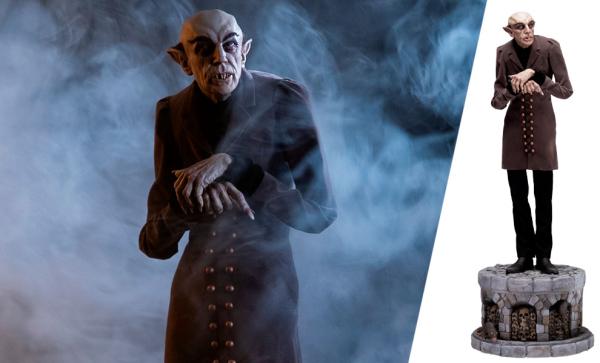
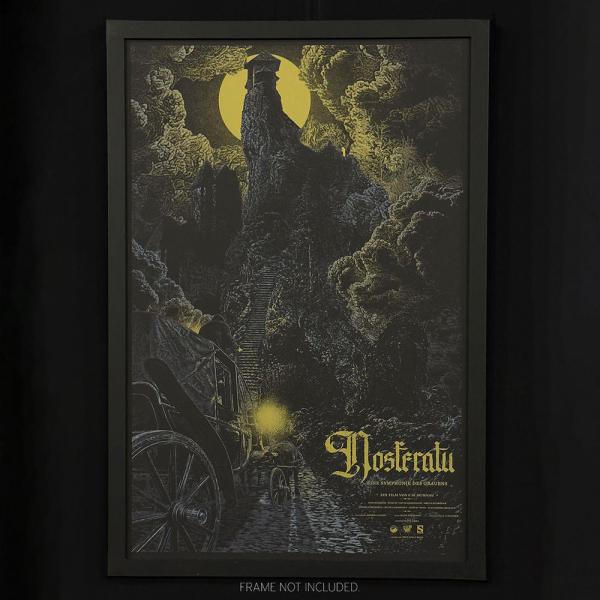
Nosferatu: A Symphony of Horror (1922)

Before we dive into the specifics of Nosferatu, we must look at its fascinating and fraught history. The silent German expressionist film is essentially a Dracula rip-off — that is to say, it was an unlicensed reproduction of Bram Stoker’s intellectual property. While the German creators altered a lot of the source material to make it more palatably German, it wasn’t different enough. Due to the unauthorized copyright infringement, Stoker’s heirs sued the filmmakers. Then, the court ordered that all copies of Nosferatu be subsequently destroyed. Yet a few prints survived, allowing Nosferatu to become the influential cinematic sensation it is today. We have to wonder what the landscape of horror films would look like without it.
In any case, you can easily track the resemblances between Nosferatu and Dracula. Nosferatu stars Max Schreck as Count Orlock, an elusive vampire who preys on nearby townspeople. Orlock’s name and legacy within the film are shrouded in mystery and fear, as most residents of Wisborg, Germany are unwilling to even utter his name. As the film progresses, we watch Orlock essentially hypnotize his victims and drink blood from their necks. Doctors blame his murder streak on plague-stricken rats.
Nosferatu‘s influence
Notably, Nosferatu has been criticized for its use of stereotypical and prejudiced perspectives on Jewish people. Unfortunately, that trend has survived into many horror movies, including anything that features a villain with a hooked nose or rat-like physical characteristics. But we are moving away from that! Thankfully, better aspects of Nosferatu have survived. The visual of a vampire disappearing in a cloud of smoke when burned by the sunlight, for instance, is a genre staple. So are beautiful, pure-hearted women in flowing nightgowns and long, lingering shots on bed chambers, coffins, and crypts.
Recently, the black and white film got its first modern remake. Nosferatu (2024) released in cinemas this month. It keeps its predecessor’s monochrome color palette and period setting. Set in 1838 Germany, the film has been lauded for its faithfulness to the original as well as Robert Eggers’ engaging directing style.
Dracula (1931)

As with Nosferatu above, let’s begin with a brief history lesson. Dracula, starring Bela Lugosi, was a pre-Code release. That means that it came out before the Hays Code was implemented in Hollywood, a conservative effort that greatly censored film at the discretion of those in power, who felt violence and sexual/suggestive content in film were corrupting viewers’ minds and morals.
Of course, by modern standards, anything from the ’30s was pretty tame. But at the time, certain studios were really pushing the envelope. One such studio was Universal, which had made waves with its run of Universal Monster movies. Dr. Jekyll and Mr. Hyde (1913), The Hunchback of Notre Dame (1923), and The Phantom of the Opera (1925), came first. Then came Dracula (1931).
Interestingly, Dracula was actually based on a stage play, which was of course based on the original book. Bela Lugosi had previously starred as Dracula on Broadway, and also landed the film role with Universal Pictures. In Dracula, the Transylvanian Count immigrates to England and preys on a young man’s fiancée. Count Dracula’s beauty, aesthetic, and elegance established a precedent for the character — and the generic vampire archetype — for years to come in pop culture.
Vamp (1986)

Naturally, it’s impossible to deny the link between vampires and sexuality. Vampires’ humanity is replaced with insatiable bloodlust that they satisfy by plunging their fangs into beautiful humans’ throats. Additionally, vampires stalk their victims at night, and often influence their way into bedrooms with little more than a bewitching gaze. The 1986 horror-comedy Vamp takes this idea and dials it up far past subtext. Here, vampires rule the evening as strippers and inhabitants of the nearby residential area.
Vamp is most significant for turning the power dynamics of the plot around. We begin with college boys who want to impress a fraternity by hiring a stripper. The boys are objectifying the women they desire, using the worker simply to gain popularity among other university peers. But then Katrina, played by Grace Jones in full body paint by Andy Warhol, takes center stage. Electrifying and almost genderless, the vampire exudes an inhuman charm that makes your jaw drop. Soon, the story becomes about survival. Is said survival a bit campy and cheesy? Sure, but it was the ’80s, after all.
The Lost Boys (1987)

The Lost Boys is truly one of the best vampire movies ever made. And okay, sure, it might be to blame for the teenage vampire and sweepingly melodramatic romance craze. Here’s looking at you, Buffy the Vampire Slayer and Twilight, among others. But that isn’t to say that any of those pieces of media are invalid, especially to those who enjoy them. At their core, those shows and movies, including The Lost Boys, are really fun. They take the heightened hormones and impulsive, highly volatile nature of young people and merge them with horror. Puberty is its own kind of horror anyway — so why not add some actual monsters in there while you’re at it?
Set in the fictional coastal town of Santa Carla, California, The Lost Boys follows Michael on his journey to belonging. Entranced by a local gang of motorcycle-riding punks led by the beautiful David, Michael gets tricked into turning. As he fights the urge to kill and become more than a fledgling, he also navigates family dynamics and young love. But The Lost Boys is far from a soap opera.
It’s got action and adventure, comedy and hidden commentary about hatred and healing. After all, the queer themes are pretty hard to miss in any vampire media, but it’s especially over in this film. A teen boy revolts against his desire for the lifestyle of another boy in leather who wants to bite him? The metaphor is transparent.
Bram Stoker’s Dracula (1992)

Bram Stoker’s Dracula is a gothic horror film that seeks to remain very close to its source material. Set in 19th-century England and Romania, it revolves around the plight of Dracula and his brides, plus Mina, Jonathan Harker, and Van Helsing. Vlad Dracula falls in love with Mina, who is Harker’s fiancée. To satisfy his needs, Dracula seduces Mina, torments her friends, and plays a strange, sensual game with everyone unfortunate enough to enter his home. In order to end Dracula’s reign of terror, the townspeople call upon the vampire hunter Professor Van Helsing. It’s a dark tale of desire and revenge that ends (how else) quite tragically.
The sets and costumes are as extravagant and lavish as you might expect. Yet there’s also an undeniably ’90s aspect (and appeal) to the whole thing. Annie Lennox’s grunge anthem in the closing credits contributes a lot to that vibe. Gary Oldman’s Dracula is also a fascinating one, somehow both repulsive and enchanting. And of course, you have a veritable powerhouse of ’90s actors, including Keanu Reeves and Winona Ryder. So even at its faulty points, Bram Stoker’s Dracula is a must-watch in the vampire film canon.
Interview With the Vampire (1994)

Based on Anne Rice’s epic and expansive book series, Interview With the Vampire features a centuries-old vampire named Louis. He is despondent and desperate to tell his tale in order to leave a legacy. Yet he also wants to escape his eternal torment — and tormenter, his creator and toxic lover, Lestat. Louis sits down with a gorgeous mortal reporter to weave a fantastic recollection of the ups and downs of his life as a blood-drinking predator. We watch everything unfold over spectacular sets and frilly frocks that are soon stained with gore and ash.
Overall, Interview With the Vampire is meant to strip away the glamor of the vampiric existence. Louis hates what he has become and what he has witnessed. Meanwhile, the selfish and egotistical Lestat convinces himself that his misery is worth it for fame and fortune. And while the film is fun and iconic in its own right, it did eventually inspire an AMC series of the same name. The series digs much deeper into the themes, adding facets of racial and sexual identity that make it a modern masterpiece of unflinchingly critical commentary.
Queen of the Damned (2002)

Queen of the Damned is also set in Anne Rice’s universe. Although the cast has completely changed, it serves as a standalone sequel of sorts which follows Lestat more closely on his journey into further debauchery. But Lestat’s story is the least interesting thing about Queen of the Damned. Instead, its indelible legacy has everything to do with Akasha. Queen of all vampires, Akasha’s ensorcelling presence is all thanks to the actress, singer, and dancer Aaliyah who plays her. While Queen of the Damned received generally negative reviews overall, nobody could deny Akasha’s appeal.
Overall, this movie is most important in the history of vampire movies because it has more Black vampires. Racial diversity is a huge issue in film, but also in this specific genre, which drools over pale, blood-drained corpses and forgets that melanin survives death.
Basically, vampire films tend to just give white men of high social statures even more money and power. To date, there are still only a handful of Black vampires in movies, including Akasha, Blade, Prince Mamuwalde, Dr. Hess Green, Ganja Meda, Maximillian, Temptress, and Katrina.
Let The Right One In (2008)

Americans tend to be a bit sensitive about monster movies revolving around kids. Luckily, Swedish filmmakers had no such reservations when adapting John Ajvide Lindqvist’s romantic horror novel. Moving and memorable, the film tells the story of a bullied 12-year old who finally finds a new friend. But the other child, called Eli, is strange and disconcerting. The two exchange messages through their shared wall in an adjoining apartment.
Over the course of the film, Eli kills and drains humans in order to live. But she seems unhappy with the situation, seemingly going through the motions without any desire to actually exist. The darkness, however, is intertwined with budding love and affection. In Let The Right One In, childhood innocence and connection collide with death in the most immeasurably beautiful and heart-wrenching way. Give yourself time to watch it in silence, without any additional screens. And then give yourself time to really ruminate on it afterwards.
Only Lovers Left Alive (2013)

Do you remember the androgynous allure of Grace Jones in the 1980s? That aesthetic returns in Only Lovers Left Alive. The indie movie stars Tom Hiddleston as Adam and Tilda Swinton as Eve, thin and sharp-featured. Both wear their hair long, their pants skinny, and their gender is ambiguous to say the least. It’s even more fascinating because they’re immortal lovers (hence the title) who have basically blended into one another. As their romance spans the decades, they remain married yet exist half a world apart. Still, the resemblance remains.
Ultimately, Only Lovers Left Alive is a strikingly intimate portrait of loneliness, success, passion, and death. The story hinges on centuries of genius and despondence, reclusive natures and fear of discovery. While the characters are vampires, the emotions resonate as very deep and human to us. As the viewer, we recognize our own hopes, dreams, and looming mortality through the lens of eternal life at its end. A haunting portrayal of vampire “life,” it was one of the last of its kind before a big genre change in the following year.
What We Do in the Shadows (2014)

Move over, sad and self-pitying immortals! There’s a new type of vampire in town, and they come from New Zealand. Taika Waititi’s What We Do in the Shadows is a mockumentary in which a fictional film crew documents the existence of vampire roommates. These guys are ridiculous and clueless, and it’s a wonder they’ve been able to survive so long. Over the course of the “footage,” it’s abundantly clear that they have to rely on witless police and dumb luck to keep going. They commit murder on camera, perform awkward dances, and even fall in love over the course of a rather short film.
Besides being laugh-out-loud funny, though, WWDITS is so charming and earnest. It’s adorable to watch immortal creatures of the night fail and fumble through social interactions. Vampires — they’re just like us! In fact, the style and humor landed so well that in 2019, FX released a spin-off television series. Although it focused on new characters, the core of it remained intact all the way through the finale, which literally just aired.
Creatures of the night, never fear! There’s a type of vampire out there to suit every horror fan’s taste.
What’s your favorite vampire movie? We’re always looking for more recommendations to sink our teeth into. Share your pulse-pounding picks at side.show/geekgroup or in the Sideshow Social Network. And as always, don’t forget to Let Your Geek Sideshow!
By Jasmine Edwards

Connect with Jasmine
More from Jasmine
- Which Creepy Clown is Scarier: The Joker or Pennywise?
- Halloween Ends: Who Has Survived Michael Myers?
- Dark Comedy: Humorous Horror Heroes and Villains
- Which Horror Movie Did You See Way Too Early?
- The Scariest Fictional Witches in Horror and Fantasy Films
✍️ Written by Humans, Not AI