Toy History: Origin of Barbie & G.I. Joe Action Figures
Listen to this article:
With thousands of toys in stores everywhere, kids have their fair share of plastic role models. But even after decades of play, two toys stand out from the rest. Two characters continue to dominate the shelves. They’ve even broken out of their boxed packages to be on screen in comics, in video games, and more. And those two characters are Barbie and G.I. Joe. (Sorry, Ken.)
Barbie and G.I. Joe are some of the oldest toys on the market, but which came first: the Barbie doll or the G.I. Joe action figure? Also, are they really that different? Let’s explore the history of these iconic, immortal idols below.
Barbie Dolls

In the 1950s, girls’ toy options were limited to baby/toddler dolls. These wide-eyed, plastic infants pigeonholed young girls into caregiver roles. Meanwhile, boys had toys that let them imagine themselves in all sorts of places, with limitless careers and possibilities ahead of them. Also, those figures were just so much … cooler.
With only so many shapes of baby to choose from, we’d also wish for anything more dynamic. Cue the innovation of Ruth Handler. Frustrated by the lack of options for her daughter, Ruth conceived of Barbie. Then she co-founded the company Mattel alongside her husband Elliot.
Barbie, full name Barbara Millicent Roberts, debuted on March 9, 1959 at the New York Toy Fair. The bombshell blonde wore a black and white striped bathing suit and boasted legs for days. She was modeled after glamour icons such as Marilyn Monroe. While critics were initially skeptical of the stark contrast between Barbie and the baby doll playthings, they should have been impressed by the ingenuity. It wasn’t long before Barbie became an international bestseller. Suddenly, girls could play at an adulthood that didn’t only involve becoming a mother.
Ken, Midge, and Skipper Dolls
Ken Carson hit the scene in 1961. Named after Ruth Handler’s son, the Ken doll was essentially Barbie’s on-and-off-again boyfriend. He was also exceedingly fashionable and eschewed the hypermasculine archetypes of many male-themed toys.
But to ensure the general public did not think Barbie and Ken were simply sex symbols, Mattel gave them family and friends. Midge Hadley, who debuted in 1963, was Barbie’s BFF. A year later, Barbie’s little sister Skipper Roberts hit the shelves.
Representation Matters
Almost a decade after Barbie’s initial rise to stardom, in 1968, the Barbie brand introduced their first Black doll. Christie, a “friend of Barbie,” was proposed in support of the Equal Rights movement. Christie also sported a fun swimsuit like her white predecessor.
It was not until 1980 that Mattel would release Black and Latina dolls actually named Barbie. New body types debuted in 2016, and even more role models and “sheroes” came to the brand in the late 2010s. Finally, Barbie reflected a better world of play for every child, teen, and adult who wanted to identify with her.
G.I. Joe Action Figures

Barbie came before G.I. Joe
Seeing Mattel’s success, Hasbro hoped to make an identical impact on the “male” toy market. So G.I. Joe was, in many ways, inspired by and influenced by Barbie. The line could even be considered a response to Barbie. G.I. Joe was released in 1964, five years after Barbie.
Although G.I. Joes were poseable and had removable accessories, they were always action figures and never dolls. But the height and way to play with them were almost identical. Interestingly enough, the “doll or action figure” debate continues well into our modern lives. Especially since Barbie and G.I. Joe both boast an impressive array of vehicles, set pieces, equipment/accessories, and colorful packaging.
But G.I. Joe was meant for an entirely different fanbase
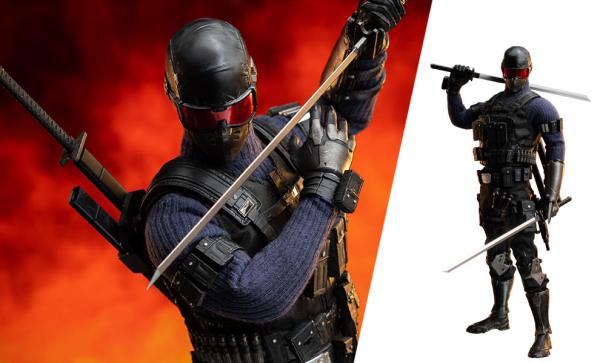
Owned and produced by the toy company Hasbro, the original G.I. Joe figures represented four U.S. military branches. Hasbro released the Action Soldier (Army), Action Sailor (Navy), Action Pilot (Air Force), and Action Marine (Marine Corps). The name “G.I. Joe” itself was derived from a universally recognized, generic slang for an American soldier. Additionally, the “action” moniker led to the coining of the phrase action figure as we see and use it today. So G.I. Joes really were the first action figures! And boy, they sure sold well.
These 12 inch figures centered on realism; they were not super heroes, although the G.I.s all had extensive martial arts, weapons, and explosives training/expertise. Hasbro expanded their four-figure line in the ’60s to include an astronaut, a diver, a Green Beret, and a Black soldier.
But in the 1960s, opinions surrounding the U.S. military soured. So Hasbro revamped and redesigned G.I. Joe, relaunching him in the 1970s as an adventurer of sorts. The new figures had beards, round dog tags, and were not associated with war. But the reception of these toys was lukewarm at best.
G.I. Joe in the 1980s
Star Wars™ (1977) revitalized audience interest in action figures. Hopping on the trend, Hasbro launched an entire line of G.I. Joe figures with new codenames, identities, and backstories. Gone were the simple stories of wartime heroes. Now the G.I.s infiltrated a terrorist organization called Cobra and wielded signature weapons.
These action figures were also notably smaller in scale compared to the initial 12 inch G.I.s, but Hasbro brought back those guys in the 1990s. And in 2004, capitalizing on nostalgia, Hasbro even re-released the 1964 classic G.I. Joes. But the line associated with science fiction and political conspiracy is still the most popular.
Brand Milestones
Movies!


Lights, camera, action … figures! While Barbie may have hit the market first, G.I. Joe got his live-action debut way before the plastic princess, engineer, teacher, et cetera ever did. G.I. Joe: The Rise of Cobra premiered in August 2009. The action-packed, over-the-top sci-fi flick was not the most well-received summer blockbuster. Yet the studios kept the franchise alive with G.I. Joe: Retaliation (2013) and Snake Eyes: G.I. Joe Origins (2013). Barbie would not appear on the silver screen until 2023, though the critical and audience reception of the Barbie movie was far superior.
Joe also got his first animated feature in 1987 with G.I. Joe: The Movie. Similarly, an earlier animated television show, G.I. Joe: A Real American Hero, garnered an impressive audience over its four seasons. Meanwhile, Barbie got a whole set of beloved animated films in the early 2000s, beginning with Barbie in the Nutcracker (2001) and ending with Barbie and the Three Musketeers (2009). Do we have the Barbie movie to blame/thank for the sudden Y2K fashion resurgence? We feel like we’ve connected some dots here.
Comics!


So did Barbie come first in everything? Not quite. G.I. Joe gets the honor with comics. Since comics were traditionally marketed towards boys and men — though we all know everyone reads comics — G.I. Joe got his shot way back in 1967. These are not to be confused with G.I. Joe comic strips/books dated from 1942, which were based around military themes and not licensed by Hasbro.
Instead, the official Hasbro G.I. Joe comics were first produced by Marvel from 1982-1994 and ran for over one hundred issues! Devil’s Due Productions took over from 2001-2008 with 80 issues plus some spin-offs. IDW took over the G.I. Joe comics from 2008-2022, before the license passed to Image’s imprint Skybound in 2023. Most recently, Skybound is publishing current G.I. Joe comics, including the launch of the Energon Universe and new stories by Larry Hama.
Barbie had her spotlight in comics too, though! And just like G.I. Joe, she started with Marvel. The ongoing series was intended for teen audiences. It ran from 1991-1996, producing 63 issues filled with beauty and bravery. Each story and cover put Barbie in one of her many career roles to save the day — or the fashion show. And while Barbie and G.I. Joe were clearly meant for polar opposite people, we can find some crossover in their readers. After all, who wouldn’t want to read about a deep sea adventure or a perilous jungle excursion? Both can and have happened in both Barbie and G.I. Joe!
So Many Ways to Play
Which did you have in your household growing up — Barbie, G.I. Joe, or both? We here at Sideshow always encourage a diverse display of dolls and action figures in every home.
Share your current collection at side.show/geekgroup or in the Sideshow Social Network. And as always, don’t forget to Let Your Geek Sideshow!
By Jasmine Edwards

Connect with Jasmine
More from Jasmine
- Which Horror Movie Did You See Way Too Early?
- The Scariest Fictional Witches in Horror and Fantasy Films
- The Best Animated Halloween Movies and Television Shows
- DC Data: Must-Know Info About Ace The Bat-Hound
- Who Is Absolute Batman? The New DC Character Explained
✍️ Written by Humans, Not AI
Related Products
Harmonia Bloom Pansy