A Dark History of Batman Throughout the 1980s
Listen to this article:
Crime-riddled streets, super-villains at their absolute worst — Gotham in the ’80s was a little rough for the Dark Knight. Heroic careers have their ups and their downs, and you could definitely say that the 1980s were a dark period for Batman.
However, that’s not to say fans don’t enjoy this time period in DC lore. In fact, some of the most powerful, well-loved Batman stories are from the 1980s. What happened to Bruce Wayne and his vigilante alter ego during this decade? Frank Miller, The Joker, and Tim Burton all made sure that Batman was quite busy. Turn on the Bat-Signal — here’s your guide to three of Batman’s most enduring tales from the 1980s.
Frank Miller’s The Dark Knight Returns in 1986

This Batman graphic novel is a story of war, leaning into the Dark Knight’s persona as a battle-hardened man who views Gotham City as his castle to protect. Frank Miller’s striking artwork adds tremendously to the bleak tone of his tale about an older Batman fighting to save his city once again. Set 10 years into the future, Batman is in his mid-50s and things aren’t looking too good for the Caped Crusader. He’s even stepped away from the cowl.
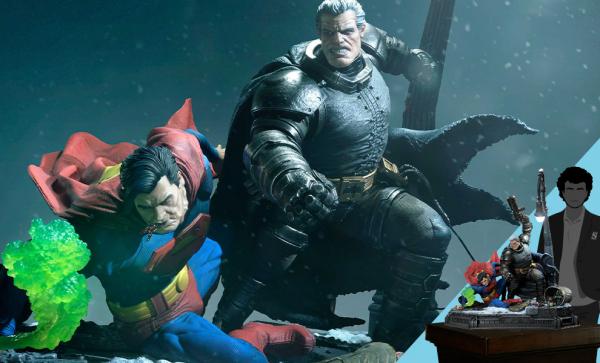
Actually, The Dark Knight Returns is the first book of a four-part series, but this title is used now to refer to the entire series. As Batman dives back into life as a vigilante, he uncovers a plot by the U.S. government to create vicious Mutants and even employ Superman to stop Batman’s efforts. We meet the intrepid Carrie Kelly version of Robin as well as run-down versions of Batman’s Rogues Gallery. Plus, this is when Batman dons his armored suit to defeat Superman and deliver his infamous victory speech over Kal-El. This battle would later inspire Zack Snyder’s Batman v Superman: Dawn of Justice.
Batman: Year One
As the title suggests, this collection focuses on Batman’s first year as a crime-fighting vigilante, seen in Batman #404-407 (1987). Written again by Miller, it’s also a partial inspiration for Matt Reeves’ recent film, The Batman (2022). The Batman in these Frank Miller stories is different from the Batman some readers might be used to; he’s green (well as green as the Dark Knight can be) and new to the whole scene, not yet a super hero but well on his way to establishing his villain-terrorizing reputation. His fledgling partnership with James Gordon of the GCPD and sometimes-ally, sometimes-enemy Catwoman are standout elements of the story. The Batman art by David Mazzucchelli further places Batman: Year One near the top of Dark Knight mythos.
Alan Moore’s Batman: The Killing Joke in 1988

When Alan Moore’s The Killing Joke rolled around in 1988, The Joker was definitely seen as Batman’s arch-nemesis, a chaotic foil to Batman’s law and order. When paired against each other, they were two sides of the same coin. But eternal enemies like these can only butt heads for so long. After a certain point, resolution must be reached — one way or another. All it takes is one bad day.
In The Killing Joke, Batman prepares to approach The Joker and reach an understanding, otherwise their rivalry will only result in death. But before Batman’s appeal can be finished, The Joker beats him to the punchline by shooting Barbara Gordon, AKA Batgirl, point blank. Batgirl is crippled and Commissioner Gordon is kidnapped, leading to a tense standoff between Batman and The Joker. Just as Batman tries one last time to reason with a raving lunatic, The Joker shares a joke and in a chilling twist of events, Batman allows himself to laugh. The panels erupt in their laughter and the reader is left pondering how different these two DC legends really are, at the end of the day.
A Death in the Family (1988)
That same year, another member of the Bat-Family would be put through the wringer by The Joker. Back in 1983, Jason Todd became Batman’s new Robin when Dick Grayson left the Boy Wonder moniker behind. Unlike Dick, Jason was a brash young man. That’s why he thought he could handle The Joker all on his own. Soon, nobody would be laughing. A Death in the Family, written by Jim Starlo and with art by Jim Aparo, led the unpopular Jason to his tragic death — an editorial decision voted on by comic book fans themselves. While Jason would eventually return, he’s never been quite the same.
Tim Burton’s Batman in 1989

By this point, it’s clear that the 1980s established a darker tone for Batman media. Not only thematically, but visually as well. Grimy shadows, inky black outlines and smoky gray smog, even the perpetual night that seems to cover Gotham City — all of these aesthetic choices led to Tim Burton being the ideal director for a big-screen Batman film.
Burton’s style is whimsically Gothic, in a laughing-all-the-way-to-the-grave kinda way, the perfect fit for a movie adaptation of Batman and The Joker. Batman (1989) features Michael Keaton as Bruce Wayne/Batman and Jack Nicholson as The Joker. Their turns as these arch-rivals were immediate successes among fans, a reminder that super hero stories could become cult classic films overnight. While both the hero and villain have flashes of manic hilarity, Batman ’89 deftly taps into the darkness that Batman fans love.
Batman Returns Comes Out in 1993
Four years later, Batman Returns hit theaters and brought audiences back to Burton’s Gothic Gotham. With Michelle Pfeiffer as Catwoman and Danny Devito as The Penguin, a dash of camp brings these characters to life while still faithfully representing their deviant natures. It’s the rare sequel that can hold a Bat-candle to its predecessor.
No matter the decade, the Dark Knight is always ready to swoop in and take down his enemies. But there’s no denying that the 1980s gave us some of the best Batman stories across DC media.
Which piece of 1980s Batman history is your favorite? Join the conversation with other DC fans over at Sideshow Social Network or in side.show/geekgroup, and don’t forget to Let Your Geek Sideshow!
By Nick Cimarusti

More from Nick
- What Is Marvel’s Zodiac About? Members + More
- Pop Culture Headlines — Marvel Announces Zodiac TV Series
- Facing the Muddy Truth: Is Clayface in DC a Villain?
- Horror Fans, Which Possession Movie Is the Best?
- New MCU Programming Ahead: VisionQuest Official Trailer
✍️ Written by Humans, Not AI