Scream with the Simians! The Top Monkeys in Horror
Humans have always held a tricky spot within the animal kingdom. We’ve battled sharks, reptiles, dinosaurs, and even atomic kaiju. But do we consider ourselves animals? Or are we above other living beings because we use complex languages and advanced tools? It’s an ongoing discourse that could really drive you bananas.
One of our most consistent foes in animal-based horror is actually our closest cousin, the primate. Throughout the decades, monkeys and apes have captured our imaginations in many ways. With Primate being released soon, here’s a look at some of the most iconic (and horrific) simians in cinema, and why they’ve hung around so well in pop culture.
King Kong (1933)

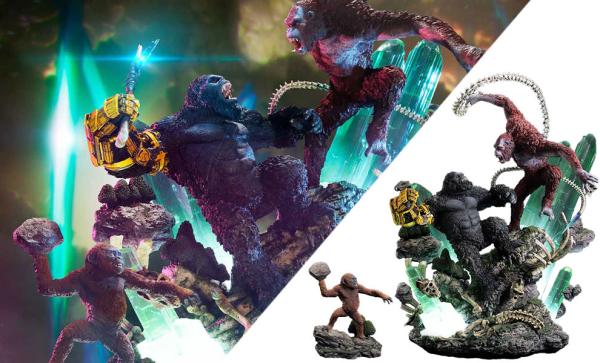
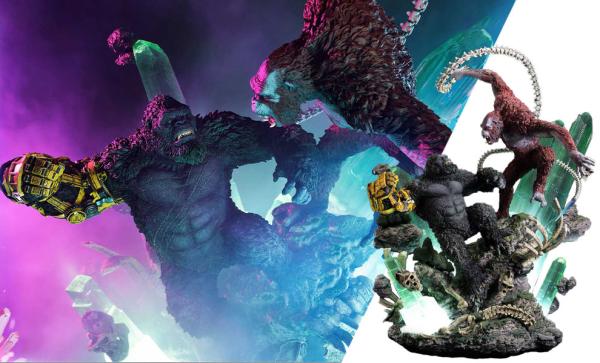
As far as the great apes go, this big guy is undoubtedly an icon. Since his 1933 debut in RKO Radio Pictures’ King Kong, the stop-motion monster of Skull Island has remained a fearsome favorite. Though other terrifying denizens occupy the island (and many of their scenes were deemed too gruesome by test audiences), Kong will always be King of monsters.
Well, he was, until the 1950s introduced Godzilla. These two oversized creatures were fated to become rivals — and even sometimes allies. Now, their shared universe of kaiju is the fodder of countless monster mash blockbusters. But that original King Kong story will always enthrall viewers as such a primal force of nature terrorizes modern civilization. A larger-than-life gorilla hanging from the Empire State Building? That’s cinematic imagery at its finest.

Kong’s story is so beloved it’s even been remade twice, first in 1976 (with Jessica Lange succeeding Fay Wray’s role) and later in 2005. The modern remake is from Peter Jackson, director of The Lord of the Rings franchise, and stars Naomi Watts as the aspiring actress.
The Ape Man (1943)

For all the modern wonders of computer generated imagery, there’s still something fascinating about crackly black and white film. Even the minimal sound mixing, with fuzzy silence in between dialogue, is somehow comforting. But that’s where the comfort stops in this old-school creature feature.
“Throngs of spirits follow us everywhere. We are never alone,” says Agatha Brewster, the ghost-hunting sister of Dr. James Brewster (played by Bela Lugosi). Agatha’s spooky presence lends another layer of macabre to this tale of revenge. After an experiment leaves him half man, half ape, Dr. Brewster plots against his former scientific partner. Naturally, he’s accompanied by an actual ape (played by Emil Van Horn), the perfect accomplice to Brewster’s murderous mayhem. Bela’s low-swinging arms and loping gait are a sight to behold, and he does a convincing job of mimicking gorilla grunts (even if they do sound a little bit like Boris Karloff’s snarls in Frankenstein).
Planet of the Apes (1968)

Based on Pierre Boulle’s novel, Planet of the Apes is a true challenge to human pride. Are we really the best equipped to rule the planet — or is that just happenstance? This 1960s film plays into our fear that we’re not as special as we might hope to believe. Humans aren’t the only creatures capable of upholding society. Our loss of power as the ruling seat is the central core to why this entire franchise grips audiences so fiercely. Plus, that ending is among the greatest cinematic twists ever.
The original sci-fi film spawned multiple sequels into the 1970s. Then, in 2011, the franchise gained the rare reboot which completely revitalizes a dormant world. With Rise of the Planet of the Apes, audiences finally witnessed just how apes came to rule over Earth. Humanity’s descent is both tragic and chilling, a reminder that the animal kingdom is always in flux. Social hierarchy, the complexities of language, and fragile ethics all come into play in this cerebral series of films that will leave you thinking long after the credits roll.
Congo (1995)

Inspired by the Michael Crichton book of the same name, this very ’90s action-adventure film is a wild ride. First, you’ve got Amy, a gorilla who has been taught to use sign language and operate a voice-generating machine. That technological innovation inevitably gets swept up in corporate greed when Amy and her handler Dr. Peter Elliot are whisked away to Amy’s homeland — the treacherous Congo jungle.
If an expedition that’s led by a talking gorilla sounds a little preposterous, you’re not exactly wrong. However, if you suspend your disbelief a little bit, Congo is a fascinating journey into the unknown. Of course, it doesn’t hurt that the story comes from the creator of Jurassic Park. Gripping adventure is practically molded into the story’s outline. Plus, once the diamond-exploiting party finally reaches their destination, the ancient simian civilization is the stuff of nightmares. Bonus points if you read the book. It’s full of outdated computer jargon as well as suspenseful exploration of the forgotten gorilla empire.
The Monkey (2025)

Yes, this one is just a toy. But that certainly doesn’t stop this little monkey from earning a shiver with that cheeky mechanical smile. Tatiana Maslany nails a peculiar yet endearing mix of whimsy and nihilism, and Theo James plays the movie’s focal pair of polar-opposite twins. Yet the real story is that monkey toy. Drum roll please…
As the box says, the monkey is “Like Life.” There’s little method to the madness in these Rube Goldberg-type killings. The only rule, it would seem, is that the person who winds up the monkey remains (relatively) safe. Freak accidents abound in Osgood Perkins’ film, and you’ll never look at a cherry pie the same again. Or use a sleeping bag. Or swim in a motel pool. The list really does go on because the good times just keep rolling with this diabolical contraption.
There are plenty of other films that bring in the monkey madness. Of course, an orangutan features prominently in Edgar Allan Poe’s “Murders in the Rue Morgue,” adapted for the screen in multiple early 20th-century films and hailed as the first detective story. However, it’s also important to note that the short story is viewed by modern audiences as thinly veiled racism.
Years later, a mystic talisman is the focal point of The Monkey’s Paw. Then, in the late 1980s, camp and horror combined to create Monkey Shines, written and directed by George A. Romero. And finally, chimpanzees play an important part in the deadly virus outbreak of 28 Days Later.
Who are your favorite monkeys in media? Join the conversation with other horror fans over at Sideshow Social Network or in side.show/geekgroup, and don’t forget to Let Your Geek Sideshow!
By Nick Cimarusti

More from Nick
- One of Those Faces: DC’s Clayface Film Review
- The Most Monstrous Villains of Batman’s Rogues Gallery
- Catch the Scariest Reptiles on World Reptile Awareness Day!
- Are You Ready to Face the Scariest MCU Moments?
- Creatures + Comics! The 10 Best Spooky DC TV Episodes
✍️ Written by Humans, Not AI