Spooktacular Poll: Which Decade Has the Best Horror?
There is a time and a place for everything, especially horror. With the season for chills and thrills in full swing, we’re all out here watching our fiendish favorites and searching for new terrible treasures. And the great thing about horror is its versatility — you’ve got gore vs non-gory, live action vs animated, black and white vs full-bleed color, even serious vs silly!
But in the spirit of Samhain, let’s be real. Everybody has their favorites. In some ways, horror trends are very cyclical but each era of horror does have its own distinct feel. With over a century of horror media to explore, there are plenty of time periods that will give you the perfect scare.
So, in your opinion, which horror decade is absolutely to die for? Tell us below then stick around for a recap of each decade’s deadliest hits.
1940s (and before) Horror

Pre-Code Hollywood gave us horror movies that really went off the deep end. During this era, there’s no doubt that the Universal Monsters reigned in the box office — many of which snuck in before the start of the Hays Code in 1934. Back in 1922, Nosferatu creeped across the silver screen. Three years later, Lon Chaney faced the music in The Phantom of the Opera. Then in 1931, Bela Lugosi and Boris Karloff brought hits like Dracula and Frankenstein to life. Perhaps the best example of pre-Code horror is Tod Browning’s unsettling Freaks (1932).
In addition to the main Universal Monsters, this era also includes King Kong (1933), The Mummy (1932), The Invisible Man (1933), Bride of Frankenstein (1935), Dracula’s Daughter (1936), The Wolf Man (1941), I Married A Witch (1942), and even thrillers like Gaslight (1944).
1950s Horror

Beware the creature feature! The 1950s gave us 10 years of gross-out monsters and a host of haunted houses. One of the most popular monsters to emerge from the ’50s is Gill-Man, the star of The Creature from the Black Lagoon (1954). But beyond the Black Lagoon, there was also Invasion of the Body Snatchers (1956), The Blob, The Fly, and Attack of the 50 Foot Woman (all from 1958).
Of course, monsters always have a place in horror. Dracula returned in the Hammer Horror films but we also saw the beginning of humans being the monsters themselves with The Bad Seed (1956). Plus, the charming special effects of haunted house flicks like House of Wax (1953) and House on Haunted Hill (1959) can’t be beat.
1960s Horror

While the days of kitschy black and white terror might be long gone, they have a certain timeless quality to them. The blood spills are like pools of darkness and the shadows are so crisply defined. Alfred Hitchcock’s Psycho (1960) ushered in a new caliber of killer. Psycho inspired audiences to fill in the blanks of every bloodbath they endured. In addition to violent motel vacancies, spirits lingered in Carnival of Souls (1962) and The Haunting (1963), while Vincent Price put Edgar Allan Poe’s poetry in motion with House of Usher (1960), The Pit and The Pendulum (1961), The Raven (1963), and The Masque of the Red Death (1964).
True to this decade’s mind-bending, hallucinogenic reputation, ’60s horror gifted us with increasingly psychedelic scares. Eyes Without A Face (1960) made viewers look inward while Hitchcock’s The Birds (1963) made them look up to the sky. Later in the decade, George A. Romero reanimated zombie flicks with the groundbreaking Night of the Living Dead (1968) and that same year, Rosemary’s Baby summoned shocking occult elements to the genre.
1970s Horror

The ’70s have that intriguing filtered effect, where the warm saturated colors bleed into each other and the acting never fails to be unsettling in its chilling candor. During this decade, horror moved away from haunted houses to home invasions. Monsters of the movies became increasingly more human (sorta) and horror dipped into sci-fi, the supernatural, and even the ocean!
First up, Regan/Pazuzu made heads spin with The Exorcist (1973), which would spark a fascination with possession movies that has lasted until today. A year later, fresh meat was on the menu with The Texas Chainsaw Massacre and not even December was safe thanks to Black Christmas. Then, the beach found its way to horror with Jaws (1975), a summer blockbuster with plenty of bite. Next in 1976, Carrie served vengeance with a side of pig’s blood and The Omen continued the Scary Satanic Kid Trend. Later in the decade, home became where the horror is with Halloween (1978), along with The Amityville Horror and When A Stranger Calls (both 1979). And at the close of the decade, Alien audiences learned that in space, no one can hear you scream.
1980s Horror

You’re invited to a summer full of slashers! Much of the most famous 1980s horror feels like a fever dream full of camp counselors and campier scares. Friday the 13th started off the endless summer of slaughters in 1980, followed closely by Sleepaway Camp (1983). Teens really reigned supreme in the ’80s, with Prom Night (1980), then A Nightmare on Elm Street (1984). Even a quick getaway amongst friends turned into not-so-groovy gore with The Evil Dead (1981) and its horde of sequels.
In this decade, dark comedy also made its way into horror with Ghostbusters and Gremlins (1984) then Beetlejuice, Child’s Play, and Killer Klowns from Outer Space (1988). Stephen King stories continued in popularity with The Shining (1980) and Cujo (1983), and creature features had a creepy comeback with The Fly (1986), Hellraiser (1987), and Pumpkinhead (1988). Stephen Spielberg and Tobe Hooper teamed up to create Poltergeist (1982). Vampires also had a strong return in The Hunger (1983), Fright Night (1985), The Lost Boys (1987), and many others.
1990s Horror

Nobody did self-referential horror like the ’90s. Teen screams arguably reached their peak during this decade, with timeless classics like I Know What You Did Last Summer (1997), The Faculty (1998), and of course, Scream (1996). Plus, this decade continued a significant turn in horror films being taken seriously at the Academy Awards, with The Silence of the Lambs (1991) and Bram Stoker’s Dracula (1992). The ’90s also began an uptick in adaptations, namely comic books like The Crow (1994), Spawn (1997) and Blade (1998).
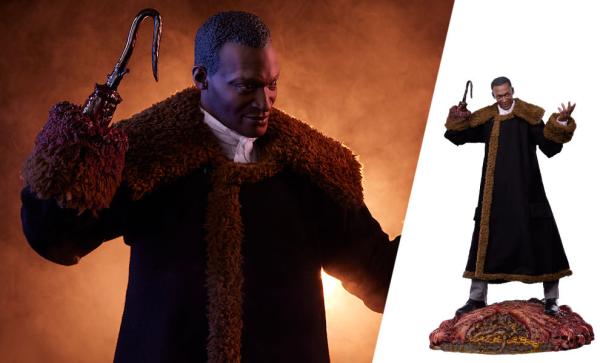
In addition to adaptations, retro horror stories also got spirited reboots with films like The Addams Family (1991 and its brilliant 1993 sequel), Psycho (1998), and House on Haunted Hill (1999). While vampires lived on in Interview with the Vampire (1994), the whimsigoth fad of the ’90s enchanted us with Hocus Pocus (1993), The Craft (1996), and Practical Magic (1998). But perhaps the most famous witch of the ’90s is one we never actually saw: the titular character of The Blair Witch Project (1999). Speaking of twists and turns, this decade also had its share of poignant thrillers (The Sixth Sense, 1999) and romantic slashers (Candyman, 1992). Yeah, you read that right — Candyman is sweet as honey.
2000s – Present Horror

Modern filmmakers can draw upon the best of the best from previous blockbusters. Today’s horror is a postmodern pastiche of everything audiences love to fear. In 2000, Scary Movie introduced young audiences to multiple horror classics and American Psycho showed the scary side of business deals. Then you’ve got new and exciting thrillers like The Others (2001) and The Strangers (2010), plus video game adaptions in Resident Evil (2002) and Silent Hill (2006). Popular genres like the creature feature would evolve with Jeepers Creepers (2001) and Jennifer’s Body (2009), as would teen screams like Final Destination (2000) and horror anthologies with Trick ‘r Treat (2007).
However, the gruesome glory of modern horror is the rise of the paranormal franchise. The Ring (2000) and The Grudge (2004) kicked things off but Paranormal Activity (2007), Insidious (2010), and The Conjuring (2013) all created richly macabre multiverses. Gore reached all new heights with Saw (2004) and Hostel (2005). More recently, production companies like A24 (Hereditary, Pearl, The VVitch) and Blumhouse (The Purge, M3GAN, The Invisible Man) established box office dominance. New slashers like Art the Clown (the Terrifier series) still pop up, too. Modern horror has also thoughtfully contributed to social commentary with films like A Girl Walks Home Alone At Night (2014), It Follows (2014), Train to Busan (2016), Get Out (2017), and Candyman (2021).
Fortunately for horror fans, the genre has more longevity than Michael Myers or Jason Voorhees combined. Every year gives us even more frightful films to devour. And there’s certainly not a wrong choice in picking your favorite — the Universal Monsters, meta murderers, and creature features can all exist harmoniously. Well … as harmoniously as horror ever goes.
Tell us your fave horror flicks from each decade! Join the conversation with other horror fans over at Sideshow Social Network or in side.show/geekgroup, and don’t forget to Let Your Geek Sideshow!
Stir up the spirits and face the monsters within … Spooktacular has been unleashed once again!
Put the EEK! in geek during Sideshow’s Spooktacular 2025, a celebration with ghastly giveaways, deathly deals, eerie exclusive perks, and more. Join us from October 23 – October 31 by visiting side.show/spooktacular and don’t forget — sleep is for the weak!
By Nick Cimarusti

More from Nick
- Grab a Lightsaber! The Best Fighters in Star Wars
- See Hot Toys’ New Avengers: Doomsday Prototype 1/6 Figures
- What Are the Most Commonly Misspelled Star Wars Words?
- Rounding Up the Best Mighty Morphin Power Rangers Quotes
- POLL: Who’s Your Favorite Jack Kirby Villain?
✍️ Written by Humans, Not AI