Star Trek: Starfleet Academy Season 1 Finale Review
Originally published March 13, 2026. This article reviews the season 1 finale of Star Trek: Starfleet Academy.
We’re past the point of no return on Star Trek: Starfleet Academy. The season 1 finale, “Rubincon,” deftly brings this story to a conclusion while paving the way for season 2 (which should beam up sometime next year).
While there’s plenty of action, the finale is an emotional affair, with its resolutions more character-based than narrative-driven. There’s something for everyone, though, and thankfully, our heroes come out on top.
“Leap Clear of All That Is Corporeal…”

“Rubincon” is a prime example of these characters thinking quickly on their feet. They are the best of the best in their respective fields. Who knew that Captain Nahla Ake paraphrasing Hermes Trismegistus would kickstart the Athena crew’s mission to take down Nus Braka? The Doctor literally makes himself “grown to a like expanse” by infiltrating the ship to create a hologram that distracts the Venari Ral. It’s a clever move on Nahla’s part to engage with the Doctor’s immense intellectualism to protect the crew and stop Nus from detonating the Omega-47 mines.
The Hermes quote really taps into one of the Star Trek franchise’s main themes. We must ascend beyond ourselves, outside our bodies, to connect with something far greater. While Hermes talks about divinity, you can easily apply this to the prevailing spirit of Trek: that our purpose, divine or otherwise, is to bond with those around us, especially with those different from us. We’re all stardust; we’re all connected. We have more similarities than what divides us.
It’s through this inherent connection to his found family that Caleb discovers true peace. In “Rubincon,” Caleb contemplates his journey from a boy living on his own in survival mode to a young man who can finally just be. He spent so long simply trying to survive that he had no sense of identity and no idea what it was like to have an inner circle. At the end of the day, this is a coming-of-age story, and Caleb’s wonderfully constructed arc fits this to a tee. The cadets and the connection they foster are at the core of Star Trek: Starfleet Academy.
Out-of-This-World Performances

Tatiana Maslany and Holly Hunter are a match made in heaven on the acting front. The trial sequences are well done, with these two titans of their craft effortlessly playing off each other. Maslany injects Anisha with palpable grief. I love that Anisha struggles to make eye contact with Nahla as she conveys her pain. Hunter is of the “less is more” camp, and it translates so well on screen. She’s such an active listener, too, which allows her to react to Maslany genuinely. Nahla exhibits an amalgam of quiet authority and empathy, rare yet admirable qualities in a leader.

Paul Giamatti is, well, Paul Giamatti. He’s your bombastic Shakespearean baddie. He approaches Nus Braka like a theater actor. Star Trek is, after all, a space opera. It’s innately theatrical. Giamatti makes Nus equal parts formidable and cocky while masking his vulnerabilities. You can also tell that he’s having an absolute blast playing around in the Star Trek universe.
Sandro Rosta cut his teeth this season as the resident newcomer, and he holds his own in a series of Trek and acting veterans. He has a natural on-screen presence, and he certainly shines in “Rubincon,” never going over the top in his performance.
Trauma Loops

“Grief” is the name of the game in “Rubincon.” Well, really, it’s a core theme for the entire season. Everyone struggles to see past their own pain and extend a hand across the aisle, as it were. Despite being on opposite sides for decades, Nahla and Anisha make space for each other’s grief in the season finale. Meanwhile, Caleb acknowledges what Tarima has endured and opens himself up to her.
Even SAM and Genesis mend fences as our favorite photonic admits she’s not the same SAM she was before episode eight, nor would she want to be. There’s a grief in shedding your skin and leaving that old self behind, even if that’s not who you want to be in the future.
A Flawed Federation
The episode also digs deep into the pain caused by colonialism and capitalism, with the Federation as a metaphor for them. Nus puts Nahla on trial to answer for the Federation’s crimes, with Anisha serving as judge, jury, and executioner. Capitalism and colonialism go hand in hand, and the grief and trauma they leave in their wake are inevitable. “Rubincon” doesn’t shy away from addressing the Federation’s imperfections in that regard. Even Nus himself is a product of this. After all, hurt people hurt people.
Again, through connection, those hurting in this episode find relief and healing. Nahla and Anisha develop a tenuous alliance. Anisha understands that Nahla will support Caleb during his tenure at the titular academy. Nahla understands Anisha’s resistance to trusting her and Starfleet. We fear what we don’t understand, but thankfully, these characters (save Nus) are open enough to reach beyond themselves in that way.
Crushing That Final Exam

Name a better instructor than Commander Jett Reno. I’ll wait. Our intrepid cadets get the final exam of a lifetime by sitting in as the bridge crew of the Athena. These scenes are Star Trek to their core. What’s better than watching the bridge crew work through a seemingly insurmountable, life-or-death issue? This is a true test of the cadets’ mettle, and we see them implement the skills they learned at the academy.
The stakes are higher than ever in the season finale. If Nus’ plan is successful, he’ll render most of space warp incapable. The fallout will be worse than The Burn, which was introduced in Star Trek: Discovery season 3 when Commander Michael Burnham and the Discovery crew arrived in the 32nd century. Those heightened stakes make it even more imperative for the Athena gang to get things right. The bridge crew scenes are proof of how much the cadets have grown over season 1. They’re cool as cucumbers under pressure (for the most part).
Star Trek: Starfleet Academy Is Different, and That’s a Good Thing

Admittedly, seeing the polarizing online discourse surrounding Star Trek: Starfleet Academy has been disappointing. It’s a solid series. This franchise is about embracing change, about boldly going into the future. Perhaps the coming-of-age aspect throws people off, but this show is breaking barriers left and right. This is the first Trek series about young cadets at Starfleet Academy, with the veteran adults serving as ancillary characters. There’s a mix of modern sensibilities with the pathos and depth for which this franchise is known.
We also have character firsts: Jay-Den is the first queer Klingon in Trek canon. He’s also the antithesis of what you’d expect from a stereotypical Klingon – Jay-Den is kindhearted, reserved, and afraid of public speaking. He’s not all about the glory of battle. Additionally, SAM is the first photonic to join Starfleet. Her homeworld, Kasq, is completely new to canon. Darem is a Khionian, and Khionia is new to the franchise as well. Genesis is a Dar-Sha/human hybrid, and the Dar-Sha are another species shrouded in mystery.
Paying Homage to Series Legacy
Starfleet Academy season 1 also honors the shows that came before it. Episode five, “Series Acclimation Mil,” is a wonderful homage to Star Trek: Deep Space Nine and Avery Brooks as the legendary Captain Benjamin Sisko. “The Life of the Stars” deftly incorporates the themes of the play “Our Town” to explore the Doctor’s overarching story, from Star Trek: Voyager to Star Trek: Prodigy to now. If Robert Picardo doesn’t make you reach for the tissues, you might be a hologram.
There’s also a Star Trek: Lower Decks-esque edge to the show’s humor (maybe because Tawny Newsome is a writer and producer). The season-long Talaxian Furfly running gag is hilarious. The cadets partying at a bar, Darem puking glitter, Caleb resetting SAM’s programming so she can experience being drunk, even the adults sitting through an awkward dinner – these scenes are all as funny as they are relatable. Despite taking place in the far future, these characters are rooted in reality. They could easily exist in the 21st century.
These misfits and outcasts finding home in each other is so sweet. You’re always putting your life on the line in Starfleet. It’s part of the job. At least having a found family by your side makes it easier to navigate.
What did you love most about Star Trek: Starfleet Academy season 1? Join the conversation alongside other Star Trek fans over at Sideshow Social Network or in side.show/geekgroup, and don’t forget to Let Your Geek Sideshow!
By Melody McCune

Connect with Melody
More from Melody
- 6 Marvel TV Episodes to Watch for Halloween
- VisionQuest Premiere Review: What It Means to Be Human
- 5 Highlights from Marvel’s WandaVision Halloween Episode
- 10 Spooky Doctor Who Episodes to Watch for Halloween
- Lanterns Season 1 Finale Review: Fear Is Power
✍️ Written by Humans, Not AI
Related Products
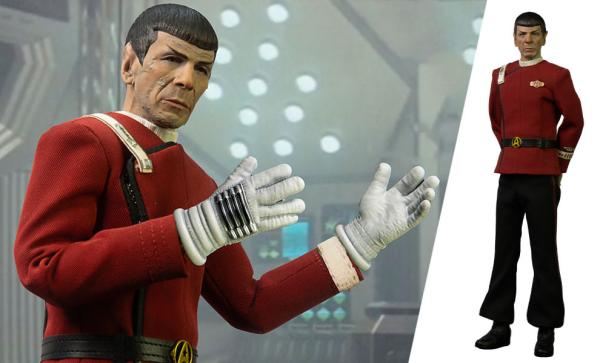
Captain Spock (Needs of the Many Version)
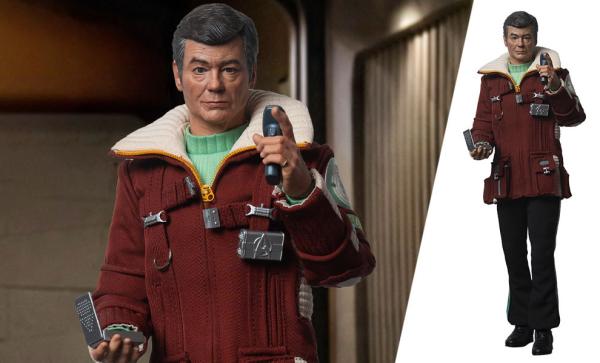
Dr. Leonard McCoy (Regula I Version)
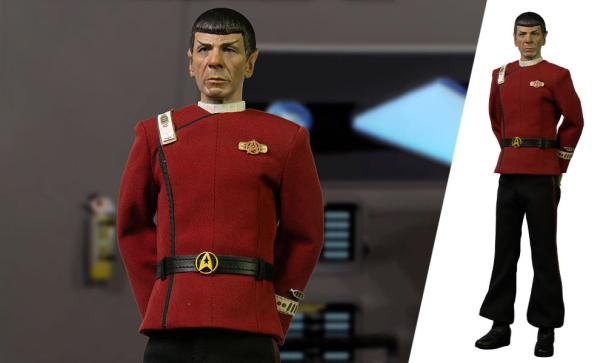
Captain Spock (Kobayashi Maru Version)