VisionQuest Finale Review: The Only Way Around Is Through
Originally published November 11, 2026. This article covers the series finale of Marvel’s VisionQuest.
Nothing lasts forever. VisionQuest just debuted its best episode yet in the form of a jaw-dropping, heartstring-tugging, hilarious, and explosive series finale. Thus ends the WandaVision trilogy, and what a fitting ending it is. Dear Marvel: Please let Terry Matalas do whatever he wants from here on out.
Aptly titled “Forever,” the VisionQuest finale delivers a satisfying conclusion to the overarching narrative while offering up a compelling meditation on what it means to be human. We get a much-anticipated family reunion (that certainly requires a box of tissues on hand) and a major tease for Avengers: Doomsday. One might say it’s quite … witchy.
It’s a Family Affair

Is there Marvel media more family-oriented than the WandaVision trilogy? Not “family-oriented” as in “family-friendly,” but a thoughtful dissection of what it means to have a family and how love — and loss — shapes who we are. WandaVision frames grief as love “persevering,” while VisionQuest digs deeper into this profound idea and acknowledges that love comes with the risk of loss. Vision and Ultron discuss it quite plainly as their cores burn up in the finale’s third act: Love always leads to loss. It’s inevitable.
Vision and Ultron’s concepts of grief as two non-human entities create an intriguing juxtaposition. WandaVision’s Vision urges Wanda to view grief positively. However, Ultron, now an aficionado of the human experience and in the throes of grief himself, paints it as “fear.”
It takes Vision’s heartbreaking admittance that grief is many things, including the “ugly” emotions, to flip on the light switch in Ultron’s mind. I love that Ultron recites Vision’s line from Avengers: Age of Ultron about a thing not being beautiful because it lasts. Everything in life is ephemeral, and that’s where the beauty lies.
What does last is who we choose to include in our inner circle. Family doesn’t always mean “blood,” and love doesn’t end when physical proximity does. Despite being creations of Wanda Maximoff, Tommy and Billy recognize each other as true brothers. Thomas finally embraces his Maximoff moniker, and Vision, following his poignant breakthrough in the penultimate episode, steps into his role as Tommy and Billy’s father. The series emphasizes the importance of community for us humans, and that’s a lesson Vision learns here.
UltraVision

Matalas and co. incorporate a delightful nod to the string of sitcom homages in WandaVision with UltraVision. Naturally, Ultron takes control of the show, and James Spader’s impeccable comedic timing really drives these scenes. You see all the intricate elements that went into the sitcom sequence, from the headlines on the newspaper Ultron is reading to every character’s clothing representing different sitcom eras and character tropes. It’s a feast for every pop culture nerd’s eyes.
It’s fitting that Ultron’s redemption comes in the form of the media he so voraciously consumed in Vision’s Mindspace Mansion earlier in the season. He learned to understand humanity through the art they created, just like Wanda found comfort and escapism in American sitcoms. This trilogy feels like a real love letter to art and media and how these things can help us heal. On a separate note, I really need a sitcom with Ultron trying to live in suburbia with human neighbors. It would win 1,000 Emmys.
“A Thing Isn’t Beautiful Because It Lasts”

If you asked me 11 years ago if I would one day root for Ultron’s redemption, I would’ve laughed at you. Huh? The genocidal robot? Of course, Spader is a huge reason why Ultron is so lovable in VisionQuest, but it’s also down to the incredible writing. I love a good villain-to-hero narrative (which is why Loki is one of my favorite MCU shows), and VisionQuest carves out such an organic evolution for Ultron that his ending makes sense.
These characters spend so much time clinging to the past and refusing to move forward. And when something ends, we lose our footing. While most humans have self-control and don’t succumb to this dark desire to destroy humanity, Ultron doesn’t, so it’s easy for him to go from zero to 100 after Jocasta dies.
VisionQuest breaks the cycle of generational trauma. Vision goes from refusing to think of Ultron as his “father” and acknowledging his former life with his family in Westview to embracing his grief and moving through it. It’s delightful to watch these synthezoids explore deeply human emotions and states of being. Vision’s cerebral take on his feelings and his knee-jerk reaction to intellectualize them instead of feel them is wholly relatable.
Powerful Performances

If Paul Bettany and James Spader aren’t nominated for Emmys, I won’t do anything about it, but I’ll be sorely disappointed. Bettany, in particular, plays multiple versions of Vision, including one controlled by Ultron, and he seamlessly bounces between them. Everything from his physicality to his vocal inflections and expressions makes these versions so different. Each portrayal is understated and natural.
Spader also shines as Ultron and now Virgil Horton in the VisionQuest finale. He has a voice made for audiobooks, too. The sharp dialogue and his sonorous voice? A match made in heaven. He also boasts electrifying chemistry with the equally fantastic T’Nia Miller, and the Ultron/Jocasta love story is a surprising highlight. Like Spader, Miller injects a playfulness and irreverence into her character. You get a sense that these two are hiding some deliciously dark secret in all their scenes together.
Ruaridh Mollica is the heart of VisionQuest as Tommy. There’s a delightful earnestness in his performance. Tommy is all of us — he’s a lonely man longing for family and companionship. Mollica delivers a grounded performance in the finale, too.
Emily Hampshire is also excellent as E.D.I.T.H., as is Todd Stashwick as Paladin (12 Monkeys reunion, anyone?). Really, the entire cast brings their A-game in this series.
Under the Mountain

If you squealed when Doctor Doom resurrected Wanda in the VisionQuest finale post-credits scene, you’re not alone. I had a sneaking suspicion we were leading to a Wanda reunion somewhere down the line. After all, she’s embedded in this show’s DNA. She’s a constant echo throughout its eight episodes. Even Vision recognizes that Tommy and Billy’s existence points to Wanda surviving the events of Doctor Strange in the Multiverse of Madness.
There’s been major speculation that Wanda is one of Doom’s Latverian Witches in Doomsday. Doom claiming he needs Wanda’s power is a pretty big indication that she’s possibly one of those three witches.
I’m now more certain that Vision, Billy, and Tommy will appear in either Doomsday or Avengers: Secret Wars (or both). That Maximoff reunion is on the horizon, folks. I think we all need it for our mental health right now.
Regardless, hats off to Marvel for keeping a tight lid on Wanda’s return for four years. It was well worth the wait. And it makes sense to end the WandaVision trilogy with the woman who started it all. Now, it’s time for Wanda to reunite with her boys. (Side note: I hope Ultron and a newly revived Jocasta appear in one of the upcoming Avengers flicks to help our heroes somehow.)
What did you think about the VisionQuest finale?
Join the conversation with other Marvel fans over at Sideshow Social Network or at side.show/geekgroup. And, as always, don’t forget to Let Your Geek Sideshow!
By Melody McCune

Connect with Melody
More from Melody
- 6 Marvel TV Episodes to Watch for Halloween
- VisionQuest Premiere Review: What It Means to Be Human
- 5 Highlights from Marvel’s WandaVision Halloween Episode
- 10 Spooky Doctor Who Episodes to Watch for Halloween
- Lanterns Season 1 Finale Review: Fear Is Power
✍️ Written by Humans, Not AI
Related Products
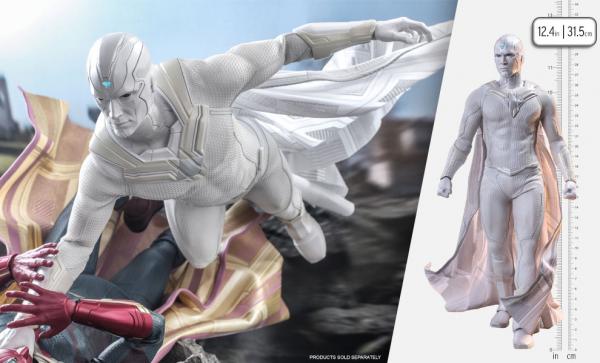
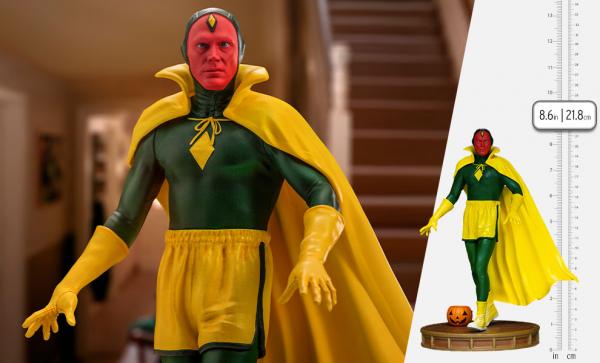
The Vision
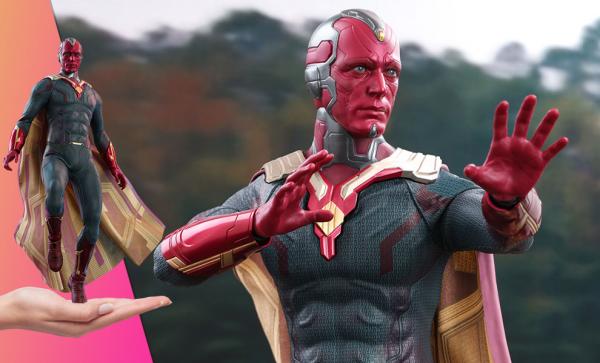
Vision
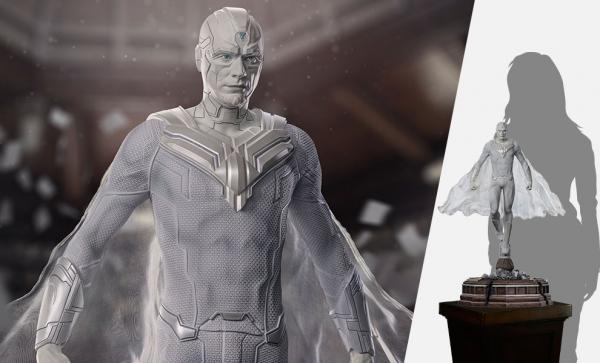
White Vision