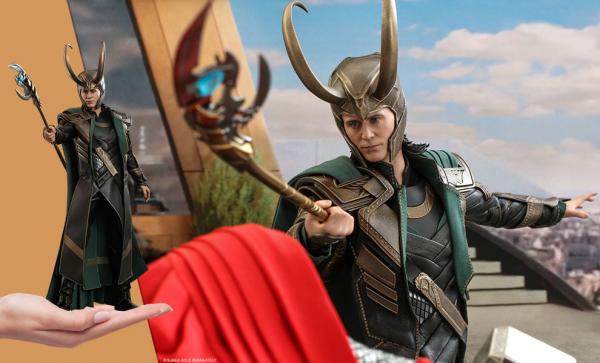
What Is Loki the God of? Marvel Mythology Explained

Loki Laufeyson is many things. First and foremost, he is infamous for playing pranks and causing mayhem across the Multiverse. He’s unapologetically queer, undeniably charming, and a skilled sorcerer to boot. Loki is also the prince of Asgard, the son of a Frost Giant, and Thor’s adopted brother. Mix all of those together, and you’ve got a potion that would impress even the Wayward Sisters. And that still doesn’t scratch the surface of what’s going on underneath Loki’s slippery skin.
That’s because Loki is an actual god. However, whereas Thor is the God of Thunder, Loki doesn’t control elements (unless you count the element of surprise). No, Loki’s skills are far more surreptitious. So what exactly is Marvel’s Loki the god of? It changes a little bit depending on your source — that is, comics or the Marvel Cinematic Universe. Let’s look at Loki’s origins, powers, and titles below.
Loki Is the God of Mischief

In Marvel comics, Loki is a Frost Giant of Jotunheim. However, his small size led to Laufey abandoning the baby, and Loki was raised in Asgard by the All-Father Odin. Asgardians treated Loki and his brother very differently, though, since Thor was physically superior. Resentful, Loki schemed of a way to get back at his family. Because Loki was so cunning and clever, he often succeeded in misleading the other gods — but he humiliated himself whenever he failed. Plus, the consequences were pretty severe whenever the gods discovered they’d been wronged.
Actually, the Avengers formed because of Loki’s cosmic meddling. Loki manipulated the Hulk into going on a rampage. Earth’s Mightiest Heroes allied to rectify the damage. You could say that Loki created his own worst antagonists since he provided a common enemy to the super hero team that would go on to thwart all of Loki’s villainous plans.
But Wait — He’s also the God of Trickery, Deception, Evil, and Lies

Lots of people stop at “mischief” when they describe Loki as a deity. Yet his accolades include even more chaos! And mischief is not interchangeable with these other words. In fact, while they make good synonyms in a pinch, they have slightly different meanings. “Mischief” refers to the Trickster God’s less mean-spirited actions. Turning his brother into a frog, conjuring illusions, and throwing knives is all in good fun, really. These are amusing antics. After all, strictly following the rules doesn’t keep life interesting enough for two rambunctious preteen princes.
Deception, meanwhile, better describes Loki’s more nefarious plots. Think like, world domination and eradicating humanity through underhanded methods and secret alliances. He will also eventually break those same alliances for his own gain. Above all, Loki values his own power and prestige. That’s potentially where we get “evil” and “lies.” Yet those aren’t strictly canon terminology when it comes to the old myths. These terms appear in older Avengers comics, including Avengers #1 (1963) and Thor Vol. 3 (2008). They don’t hail from the original Norse mythology. Indeed, they simply tack on more adjectives to Loki, defining him solely by those bad deeds.
Are Loki’s Variants also Gods?
The Disney+ series Loki introduced a whole lotta Lokis. These Variants caused too much mayhem in the timelines, so they were dumped into the Void by the TVA. Sylvie Laufeydottir was the most interesting of them all. She was the only female Variant and a princess of Asgard. Sylvie also knew early on that she was adopted, and was raised in a stable environment where she was free to explore her Frost Giant heritage and magical abilities. And yes, this Loki Variant was Goddess of Mischief.
Classic Loki, Alligator Loki, Boastful Loki, Kid Loki, and Vote Loki are more difficult to pin down. We don’t know too much about these Variants. However, Classic Loki was certainly powerful enough to be a god, sharing his strength and costume with the first comic iteration of the character. And Kid Loki’s resemblance to his Young Avengers counterpart means he could be the powerful reincarnation who resets Loki’s story.
In the MCU, Loki Is Now the God of Stories

MCU Loki has some of the best character growth in pop culture history. In the beginning, he was a selfish brat. Feeling as though Thor outshined him at every turn, Loki was jealous, bitter, and spiteful. He longed for revenge and an outlet for his rage. So, when Thor became an Avenger, Loki aimed to overthrow the Asgardian throne and destroy the Earth which Thor held dear. Loki’s early days in the MCU could be likened to a child throwing a temper tantrum that literally cost countless lives. Yikes.
A decade later, however, Loki redeemed himself. He spent lifetimes and time-loops figuring out a way to restore splintered timelines. When nothing worked, he chose the ultimate sacrifice. Loki wrapped himself in his magic and walked straight into an overloaded Temporal Loom core. He literally grabbed the timelines with his bare hands. Holding tight, he pulled and stitched them together around a throne and cloak of his own making. Now, Loki holds the entire Multiverse together from his makeshift Tree of Life, protecting the people he once called ants.
The Binding of Loki
In Norse myth, Loki killed Baldur. As punishment, the Aesir (Norse pantheon of gods) bound Loki in a cave with the entrails of his own son. Snake venom dripped into his eyes from above, and Loki was left to rot for eternity — or at least until Ragnarök. Fortunately, Loki’s MCU story ended tragically but not viciously like this. Loki atoned for his sins against his family and humanity by shielding them for all eternity with his own spells.
So, how does that make him the God of Stories? In a sense, Loki is protecting every story that has been or will be told. Loki’s isolated kingdom resembles Yggdrasil … or some really fancy veins with a god at the center of it all. Loki is the beating heart pumping blood and oxygen into now-thriving timelines. All stories can coexist in the Multiverse without fractures or pruning thanks to one god. So thank you, Loki, for keeping our Marvel Cinematic Universe intact.
Now that you know what Loki is capable of, you better start to believe in him! Or at least grab some Loki collectibles for your shrine — we mean, shelf. Then, show off your collection at side.show/geekgroup or in the Sideshow Social Network. And as always, don’t forget to Let Your Geek Sideshow!
By Jasmine Edwards

Connect with Jasmine
More from Jasmine
- Which Horror Movie Did You See Way Too Early?
- The Scariest Fictional Witches in Horror and Fantasy Films
- The Best Animated Halloween Movies and Television Shows
- DC Data: Must-Know Info About Ace The Bat-Hound
- Who Is Absolute Batman? The New DC Character Explained
✍️ Written by Humans, Not AI
Related Products
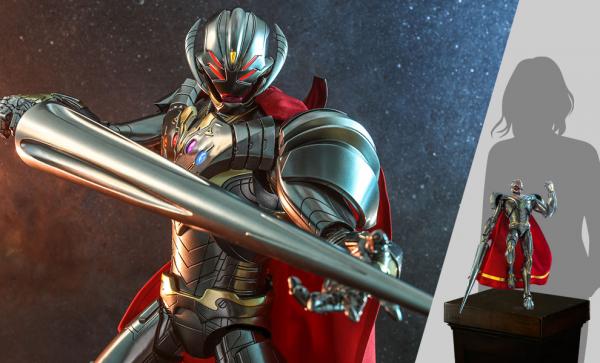
Infinity Ultron
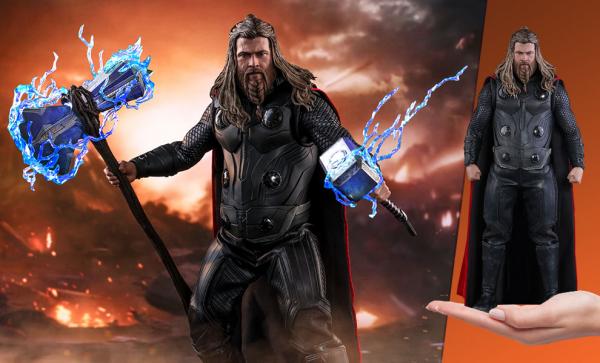
Thor
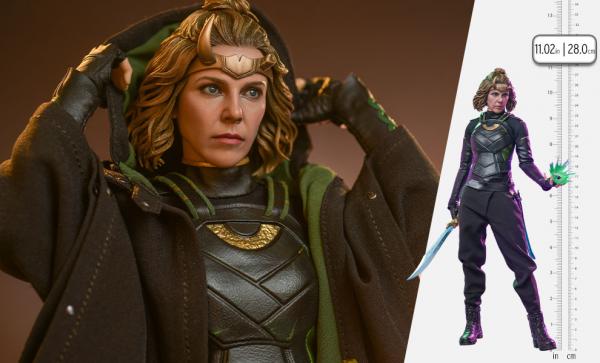
Sylvie